
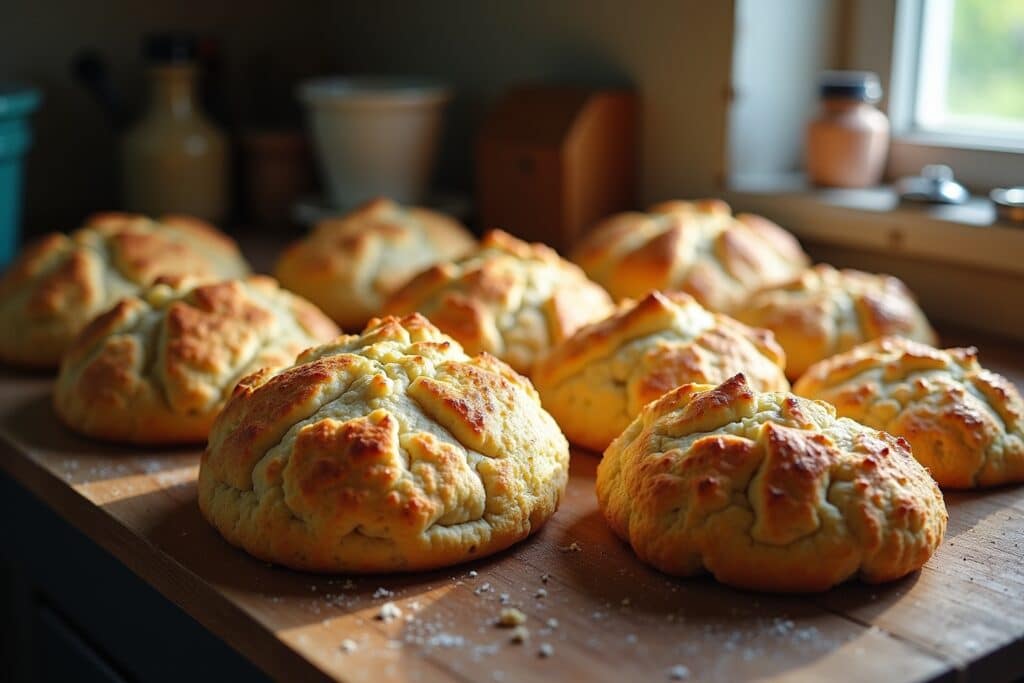
Craving freshly baked goods but short on time or don’t have yeast on hand? Discover the magic of no-yeast baking, where simple ingredients and quick methods deliver delicious results. You’ll learn how to create a variety of breads, pastries, and other baked treats without the long proofing times associated with traditional yeast-leavened recipes.
These are the most popular No Yeast Baking Book products
Keine Produkte gefunden.The Science Behind No Yeast Baking
No-yeast baking relies on chemical leaveners to achieve a light and airy texture, rather than the biological action of yeast. These leaveners, primarily baking soda and baking powder, react with other ingredients and heat to produce carbon dioxide gas. This gas expands within the dough or batter, creating the lift and rise you expect from baked goods. Understanding how these leaveners work is key to achieving consistent success in your quick baking adventures.
Baking Soda, or sodium bicarbonate, is an alkaline compound. It requires an acidic ingredient to activate and produce carbon dioxide. Common acidic ingredients in no-yeast baking include buttermilk, yogurt, sour cream, lemon juice, vinegar, molasses, and brown sugar. The reaction starts immediately upon mixing wet and dry ingredients, so it’s crucial to bake these items promptly after mixing to capture as much of the gas as possible.
Baking Powder is a complete leavening agent, containing both an acid and a base, along with a starch filler. Most commercially available baking powder is double-acting, meaning it reacts twice: once when it gets wet and again when it is heated in the oven. This provides a more sustained lift and a bit more forgiveness in timing compared to baking soda alone. When a recipe calls for baking powder, you generally have a slightly longer window before baking.
Key Ingredients for Rapid Baking
Beyond chemical leaveners, several other ingredients are fundamental to successful no-yeast baking. These are the building blocks that contribute to flavor, texture, and structure.
- Flour: All-purpose flour is the most common choice, providing a good balance of gluten for structure. For denser items like scones or biscuits, you might opt for pastry flour or a mix. Whole wheat flour can be used for a nuttier flavor and added fiber, though it may result in a denser crumb.
- Fat: Butter, margarine, or oil are essential for tenderness and flavor. Butter provides a rich taste and contributes to flakiness in items like biscuits and scones. Oil tends to create a moister crumb.
- Liquid: Milk, buttermilk, water, or yogurt provide moisture and help bind the ingredients. Buttermilk and yogurt add a pleasant tang and react with baking soda for extra lift.
- Sweetener: Sugar, honey, or maple syrup contribute sweetness and aid in browning. The type and amount of sweetener can significantly impact the final texture and flavor.
- Eggs: Eggs bind ingredients, add richness, and contribute to the structure and color of baked goods.
- Salt: Salt enhances all the other flavors in your recipe.
Quick Bread Recipes: The Foundation of No Yeast Baking
Quick breads are arguably the most popular category in no-yeast baking. They are designed to be mixed and baked in under an hour, making them perfect for busy days or impromptu cravings. The batter is typically mixed wet and dry ingredients separately and then combined with minimal stirring to avoid developing too much gluten, which can lead to a tough product.
Common quick breads include:
- Muffins: These single-serving delights are incredibly versatile. From classic blueberry and chocolate chip to more adventurous savory options, muffins are a go-to for a speedy baked treat.
- Scones: Often slightly denser than muffins, scones are perfect for breakfast or afternoon tea. They can be sweet, studded with fruit or chocolate, or savory with cheese and herbs.
- Biscuits: Flaky and tender, biscuits are a staple in many cuisines. They can be served with butter and jam, as a side to savory dishes, or as the base for a biscuit sandwich.
- Loaf Cakes and Quick Breads: These are larger, cake-like breads that are baked in a loaf pan. Think banana bread, zucchini bread, or simple lemon loaf. They are fantastic for sharing.
Savory No Yeast Baking: Beyond Sweet Treats
No-yeast baking isn’t limited to sweet recipes. You can create a wide array of savory delights that are just as quick and satisfying.
- Soda Bread: A classic Irish quick bread made with baking soda. It’s hearty, slightly dense, and perfect for dipping in soup or enjoying with butter and cheese.
- Flatbreads and Naan: While traditional naan is yeast-leavened, many quick versions use baking powder or a combination of baking soda and yogurt to achieve a soft, chewy texture similar to the original.
- Crackers: Homemade crackers are incredibly easy to make without yeast. You can customize flavors with herbs, spices, and seeds for a healthy and delicious snack.
- Pizza Crusts: For a super-fast pizza night, a no-yeast pizza crust is a lifesaver. These crusts bake up crisp and are ready for your favorite toppings in no time.
Tips for Perfect No Yeast Baking Results
Achieving consistently great results in no-yeast baking is straightforward when you follow a few key principles:
- Do Not Overmix: This is perhaps the most critical rule. Overmixing develops gluten, leading to tough, dense baked goods. Mix wet and dry ingredients just until they are combined. A few streaks of flour are often acceptable.
- Measure Accurately: Especially with flour and leaveners, precise measurements are important. Spoon flour into your measuring cup and level it off with a straight edge rather than scooping directly from the bag, which can compact the flour.
- Preheat Your Oven: A properly preheated oven ensures even baking and optimal rise from your chemical leaveners.
- Bake Promptly: For recipes relying heavily on baking soda, get them into the oven as soon as possible after mixing to maximize the lift from the initial reaction.
- Don’t Overcrowd the Baking Sheet: Allow adequate space for heat circulation, which promotes even browning and cooking.
- Use Fresh Leaveners: Baking soda and baking powder lose their potency over time. Check the expiration dates and test them if you’re unsure (a teaspoon of baking soda in vinegar should fizz vigorously; a teaspoon of baking powder in hot water should bubble).
Understanding Baking Times and Temperatures
Baking times and temperatures can vary depending on your oven and the size and shape of your baked goods. However, some general guidelines apply to no-yeast recipes.
Most quick breads and muffins bake at temperatures between 350°F (175°C) and 400°F (200°C). Higher temperatures are often used for items like biscuits and scones to achieve a quick rise and golden-brown exterior, while slightly lower temperatures might be preferred for cakes to ensure they cook through without burning. Always refer to your specific recipe for precise instructions.
To check for doneness, insert a toothpick or a thin knife into the center of the baked good. If it comes out clean, it’s ready. For breads, the crust should also sound hollow when tapped.
Troubleshooting Common No Yeast Baking Issues
Even with simple recipes, challenges can arise. Here’s how to troubleshoot common problems:
- Dense or Heavy Texture: This is often due to overmixing, using old or inactive leaveners, or not enough leavener.
- Crumbly Texture: Insufficient liquid or fat, or too much flour, can lead to baked goods that fall apart easily.
- Flat and Unrisen Products: This is usually caused by inactive leaveners, not baking promptly enough (especially with baking soda), or an oven that isn’t hot enough.
- Tough Crust: Overmixing the dough can result in a tough crust.
- Uneven Browning: This can happen if the oven temperature is too high or if the baked goods are not spaced adequately on the baking sheet.
A Snapshot of No Yeast Baking Categories
| Category | Key Characteristics | Typical Leavener | Examples | Preparation Time |
|---|---|---|---|---|
| Quick Breads (Muffins, Loaves) | Moist, tender crumb, often sweet | Baking powder, baking soda | Blueberry muffins, Banana bread, Zucchini bread | 10-15 minutes mixing, 20-40 minutes baking |
| Scones & Biscuits | Flaky, tender, can be sweet or savory | Baking powder, baking soda | Fruit scones, Buttermilk biscuits, Cheddar biscuits | 10-15 minutes mixing, 12-20 minutes baking |
| Savory Breads & Flatbreads | Hearty, versatile, often served with meals | Baking soda, baking powder | Soda bread, Quick naan, Herb crackers | 10-15 minutes mixing, 15-30 minutes baking |
| Cakes & Brownies (Quick Versions) | Moist, rich, cake-like or fudgy | Baking powder, baking soda | One-bowl chocolate cake, Fudge brownies (no-yeast) | 10-20 minutes mixing, 25-40 minutes baking |
Incorporating Healthy Options in No Yeast Baking
You can easily make your no-yeast baked goods healthier without sacrificing flavor or texture. Consider these substitutions and additions:
- Whole Grains: Substitute half or all of the all-purpose flour with whole wheat flour, oat flour, or almond flour.
- Natural Sweeteners: Use honey, maple syrup, or date paste instead of refined sugar, adjusting liquid amounts if necessary.
- Fruits and Vegetables: Add pureed fruits (like applesauce or banana) or grated vegetables (like zucchini or carrots) to boost moisture, nutrients, and natural sweetness.
- Seeds and Nuts: Incorporate chia seeds, flax seeds, chopped nuts, or sunflower seeds for added fiber, protein, and healthy fats.
- Reduced Fat: Use unsweetened applesauce or Greek yogurt to replace some or all of the oil or butter in recipes.
These are the latest No Yeast Baking Book products with the best ratings.
Keine Produkte gefunden.FAQs – Frequently Asked Questions about No Yeast Baking: Schnelle Rezepte
What is the primary difference between yeast baking and no yeast baking?
The fundamental difference lies in the leavening agent. Yeast baking relies on living yeast organisms that ferment sugars, producing carbon dioxide gas over time to make dough rise. No-yeast baking uses chemical leaveners like baking soda and baking powder, which react quickly with other ingredients and heat to create carbon dioxide gas for immediate lift.
Can I use baking soda instead of baking powder, or vice versa, in no yeast recipes?
Not always interchangeably. Baking soda requires an acidic ingredient to activate and produce gas. Baking powder is a complete leavener that already contains an acid. If a recipe calls for baking soda, it typically includes an acidic component. If it calls for baking powder, it might not. Substituting one for the other without adjusting other ingredients can result in a flat or overly dense product, or an off-flavor.
Why are my no yeast muffins or quick breads tough?
Toughness in no-yeast baked goods is most often caused by overmixing the batter. Once the wet and dry ingredients are combined, mix only until just incorporated. A few small lumps are perfectly fine. Overmixing develops the gluten in the flour, leading to a rubbery texture.
How can I ensure my quick breads rise properly without yeast?
Proper rising depends on fresh, active leaveners, accurate measurement, and prompt baking. Ensure your baking soda and baking powder are not expired. Measure them precisely. For recipes with baking soda, mix and bake immediately. For recipes with double-acting baking powder, ensure your oven is fully preheated before baking. Avoid opening the oven door too early during the baking process.
What is the shelf life of no yeast baked goods?
No yeast baked goods generally have a shorter shelf life than their yeast-leavened counterparts. Quick breads and muffins are best consumed within 1-3 days when stored in an airtight container at room temperature. Biscuits and scones are best eaten the day they are made for optimal texture. They can often be frozen for longer storage.
Can I make a sourdough starter substitute for no yeast baking?
No, a sourdough starter is a living culture of wild yeast and bacteria. It functions similarly to commercial yeast, requiring time to ferment and leaven. You cannot use it as a direct substitute for baking soda or baking powder in quick baking recipes. If you are looking for a sour flavor without commercial yeast, you would typically use ingredients like buttermilk or sour cream in conjunction with baking soda.
Are there any specific types of flour that work best for no yeast baking?
All-purpose flour is a versatile choice for most no-yeast baking. For tender results like biscuits and scones, a lower-protein pastry flour can be beneficial. For denser, heartier baked goods, you can incorporate whole wheat flour or other whole grain flours. Be aware that higher amounts of whole grain flours can absorb more liquid and may result in a denser outcome.


