
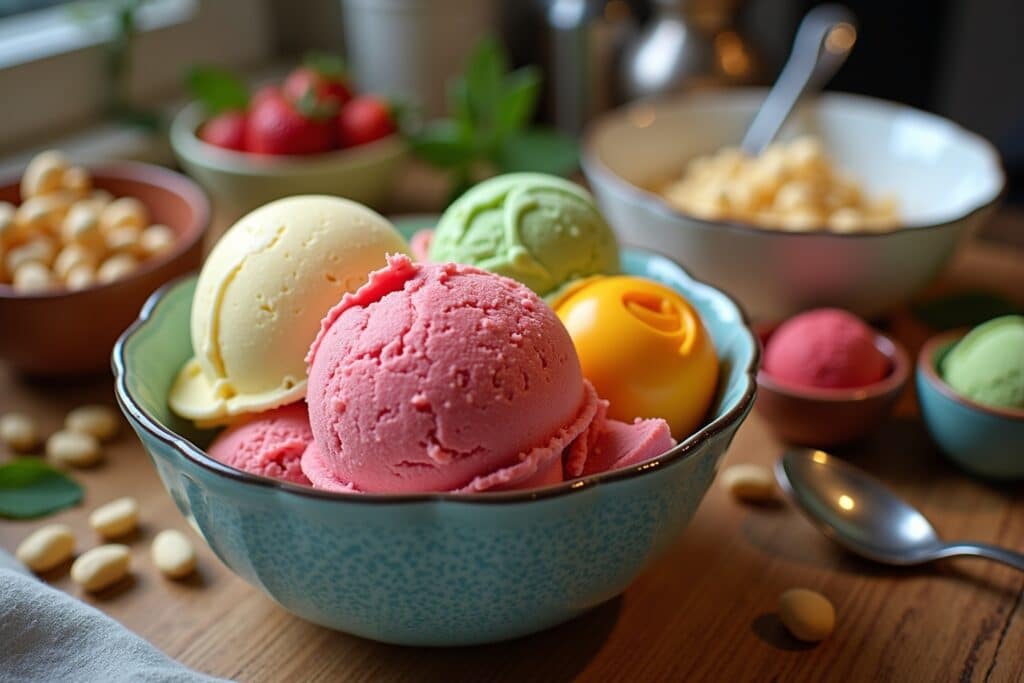
Dreaming of authentic Italian gelato from your own kitchen? You can achieve that silky smooth texture and intense flavor without an expensive trip to Italy. This guide unveils the secrets to crafting the best homemade gelato recipes, transforming your culinary skills into a personal artisanal gelateria.
These are the most popular Gelato Recipe Book products
Keine Produkte gefunden.Understanding the Art of Gelato Making
Gelato, unlike its ice cream cousin, is characterized by its lower fat content, less air incorporated during churning, and a slightly warmer serving temperature. These distinctions contribute to its denser texture and more vibrant flavor. Mastering these elements is key to replicating the true gelato experience at home. The primary components remain similar to ice cream: a dairy base, sugar, and flavorings. However, the proportions and techniques differ significantly.
The Base: Milk, Cream, and Yolks
A classic gelato base typically uses a higher ratio of milk to cream compared to ice cream. This lower fat content allows the flavors to shine through more intensely. While some recipes forgo egg yolks entirely, many traditional Italian gelati incorporate them for richness and stability. The yolks act as emulsifiers, binding the fat and water molecules, which results in a smoother, more stable emulsion and prevents the formation of ice crystals. A common starting point for a base might be around 2 cups of whole milk and 1 cup of heavy cream. For recipes using egg yolks, you might incorporate 4-6 large yolks.
Sweetness and Flavor
The type and amount of sugar play a crucial role. Granulated sugar (sucrose) is standard, but you’ll often find recipes using a combination of sugars. Dextrose, a simple sugar derived from corn, is frequently added because it lowers the freezing point of the mixture more effectively than sucrose, contributing to a softer, less icy texture. Invert sugar (like corn syrup or honey, though honey adds its own flavor) also helps prevent crystallization and maintain a smooth consistency. The sweetness level should be carefully balanced with the primary flavorings. For instance, intensely flavored ingredients like dark chocolate or strong coffee might require slightly less added sugar. Fresh, high-quality ingredients are paramount for achieving authentic gelato flavors. Think ripe fruits, premium cocoa powder, or freshly brewed espresso.
The Churning Process: Less Air, More Density
The defining characteristic of gelato is its low overrun, meaning the amount of air incorporated during churning. Ice cream can have an overrun of 50-100%, while gelato typically has an overrun of 20-30%. This is achieved through slower churning speeds and a base that is often slightly thicker. Homemade ice cream makers, especially those with a frozen bowl, can be adapted for gelato making. You’ll want to chill your base thoroughly before churning, and the process itself will take longer due to the denser mixture. Once churned, gelato is often “ripened” in the freezer for a few hours to firm up to the perfect scooping consistency.
Essential Gelato Recipes to Master
Starting with foundational recipes will build your confidence and understanding of the gelato-making process. These classic flavors are a great entry point and can serve as a springboard for your own creative variations.
Classic Vanilla Bean Gelato
This is the quintessential gelato flavor and a testament to the power of simple, high-quality ingredients. The subtle floral notes of real vanilla bean elevate this classic to an art form.
- Ingredients:
- 2 cups whole milk
- 1 cup heavy cream
- 3/4 cup granulated sugar
- 6 large egg yolks
- 1 vanilla bean, split and scraped
- Pinch of salt
- Instructions:
- In a medium saucepan, combine the milk, heavy cream, and vanilla bean seeds and pod. Heat gently over medium heat until it just begins to simmer. Remove from heat, cover, and let steep for 30 minutes to infuse the vanilla flavor.
- In a separate bowl, whisk together the sugar and egg yolks until pale and creamy.
- Remove the vanilla bean pod from the milk mixture. Gradually temper the egg yolk mixture by slowly whisking about half a cup of the warm milk mixture into the yolks.
- Pour the tempered yolk mixture back into the saucepan with the remaining milk. Cook over low heat, stirring constantly with a wooden spoon or silicone spatula, until the custard thickens enough to coat the back of the spoon (about 175°F or 80°C). Do not boil.
- Strain the custard through a fine-mesh sieve into a clean bowl. Stir in the pinch of salt.
- Cover the surface of the custard directly with plastic wrap to prevent a skin from forming. Chill thoroughly in the refrigerator for at least 4 hours, or preferably overnight.
- Once chilled, churn the gelato base in your ice cream maker according to the manufacturer’s instructions.
- Transfer the churned gelato to an airtight container and freeze for at least 2-4 hours to firm up before serving.
Rich Chocolate Gelato
For chocolate lovers, this recipe delivers an intense, satisfyingly deep chocolate flavor. Using both cocoa powder and dark chocolate ensures a complex taste profile.
- Ingredients:
- 1.5 cups whole milk
- 1 cup heavy cream
- 3/4 cup granulated sugar
- 1/2 cup unsweetened cocoa powder (Dutch-processed recommended for smoother flavor)
- 4 large egg yolks
- 4 ounces bittersweet or dark chocolate (60-70% cacao), finely chopped
- 1 teaspoon vanilla extract
- Pinch of salt
- Instructions:
- In a medium saucepan, whisk together the milk, heavy cream, sugar, and cocoa powder until smooth. Heat gently over medium heat until it just begins to simmer. Remove from heat.
- In a separate bowl, whisk together the egg yolks.
- Temper the egg yolk mixture by slowly whisking about a cup of the warm chocolate-milk mixture into the yolks.
- Pour the tempered yolk mixture back into the saucepan. Cook over low heat, stirring constantly, until the custard thickens enough to coat the back of the spoon (about 175°F or 80°C). Do not boil.
- Remove from heat and stir in the finely chopped dark chocolate until completely melted and smooth. Stir in the vanilla extract and salt.
- Strain the mixture through a fine-mesh sieve into a clean bowl.
- Cover the surface directly with plastic wrap and chill thoroughly in the refrigerator for at least 4 hours, or overnight.
- Churn the gelato base in your ice cream maker according to the manufacturer’s instructions.
- Transfer to an airtight container and freeze for at least 2-4 hours to firm up.
Lemon Sorbetto (A Dairy-Free Alternative)
While technically a sorbetto, this refreshing, dairy-free Italian classic offers a similar intensely flavored experience. It’s a perfect palate cleanser and incredibly satisfying on a warm day.
- Ingredients:
- 2 cups water
- 1.5 cups granulated sugar
- 1 cup fresh lemon juice (from about 4-6 lemons)
- Zest of 2 lemons
- Instructions:
- In a medium saucepan, combine the water and sugar. Heat over medium heat, stirring until the sugar is completely dissolved. Bring to a gentle boil and cook for 1 minute.
- Remove from heat and stir in the lemon zest. Let the mixture steep for 15-20 minutes.
- Strain the syrup through a fine-mesh sieve into a bowl, discarding the zest.
- Stir in the fresh lemon juice.
- Chill the mixture thoroughly in the refrigerator for at least 2 hours, or until very cold.
- Churn the sorbetto base in your ice cream maker according to the manufacturer’s instructions.
- Transfer to an airtight container and freeze for at least 2-4 hours to firm up.
Advanced Techniques and Flavor Inspirations
Once you’ve mastered the basics, you can explore more complex flavors and techniques to elevate your homemade gelato.
Infusing Flavors
The steeping process used in the vanilla and chocolate recipes can be applied to many other ingredients. For example:
- Coffee Gelato: Steep freshly ground coffee beans in the milk and cream mixture.
- Herbal Gelato: Infuse fresh herbs like basil, mint, or rosemary for subtle, sophisticated flavors.
- Spiced Gelato: Add whole spices like cinnamon sticks, star anise, or cardamom pods to the heating milk.
Fruit Gelato Variations
Fruit gelato relies on pureed fresh fruit for its primary flavor. The key is to balance the fruit’s natural sugars with the base.
- Strawberry Gelato: Puree fresh, ripe strawberries and add them to the chilled base before churning. A touch of lemon juice enhances the strawberry flavor.
- Raspberry Gelato: Similar to strawberry, use pureed raspberries. For a smoother texture, you might consider sieving the puree to remove seeds.
- Mango Gelato: Use ripe, sweet mangoes for a tropical delight. Ensure the mango puree is smooth.
When working with fruits, especially those with high water content, you might need to adjust the sugar and dairy ratios slightly. Some recipes call for adding fruit puree towards the end of the churning process to preserve its fresh flavor and texture.
Nutty Delights
Nut-based gelati require toasting the nuts to enhance their flavor before incorporating them.
- Pistachio Gelato: Use high-quality, unsalted pistachios. Toast them lightly, then grind them into a paste or finely chop them to add to the base. Natural pistachio paste is also a readily available option.
- Hazelnut Gelato: Similar to pistachios, toast hazelnuts, remove skins if possible, and process them into a paste or finely chopped.
A crucial tip for nut gelati is to ensure your nut paste is smooth and well-emulsified into the base. This prevents a grainy texture.
Tools for the Home Gelato Artisan
While you don’t need professional equipment, a few key tools will make your gelato-making journey much smoother.
| Tool | Purpose | Importance for Gelato |
|---|---|---|
| Ice Cream Maker | Chills and churns the base, incorporating minimal air. | Essential for achieving gelato’s dense texture. Look for models with good freezing capacity. |
| Saucepans (Heavy-Bottomed) | For heating and cooking the custard base. | Prevents scorching and ensures even heating. |
| Whisk | For mixing ingredients and tempering eggs. | Crucial for a smooth, lump-free custard. |
| Fine-Mesh Sieve | For straining the base and removing impurities. | Ensures a silky smooth final product, especially important after cooking custards. |
| Digital Thermometer | For accurately measuring the temperature of the custard. | Essential for achieving the correct custard consistency without overcooking. |
| Airtight Containers | For storing churned gelato in the freezer. | Prevents freezer burn and ice crystal formation. |
Troubleshooting Common Gelato Issues
Even with the best recipes, you might encounter a few challenges. Here’s how to tackle them.
Icy Gelato
The most common culprit for icy gelato is too much water or not enough fat/sugar, or insufficient churning. Ensure your base is well-chilled before churning and that you’re using the correct proportions of ingredients. Using a stabilizer like a small amount of cornstarch or a commercial gelato stabilizer can also help.
Not Freezing Properly
This can happen if your ice cream maker bowl isn’t frozen sufficiently, or if the base is not cold enough. For compressor models, ensure the unit has had enough time to reach its optimal freezing temperature.
Grainy Texture
Graininess often stems from undissolved sugar or milk solids that have cooked too quickly. Whisking thoroughly and straining the base are key preventative measures. If using nuts, ensure they are processed into a fine paste.
Serving and Storing Your Homemade Gelato
Gelato is best served at a slightly warmer temperature than ice cream, typically around 15-20°F (-9 to -7°C). This allows its flavors and textures to be fully appreciated. Take your gelato out of the freezer 5-10 minutes before serving to allow it to soften slightly. Store leftover gelato in an airtight container in the coldest part of your freezer. Placing a piece of parchment paper or plastic wrap directly on the surface of the gelato before sealing the container can help prevent ice crystals.
These are the latest Gelato Recipe Book products with the best ratings.
Keine Produkte gefunden.FAQ – Frequently Asked Questions about Die besten Gelato Recipes für zu Hause
What is the fundamental difference between gelato and ice cream?
The primary distinctions lie in fat content, air incorporation (overrun), and serving temperature. Gelato typically has less fat (using more milk than cream), less air churned in, and is served slightly warmer, resulting in a denser, smoother texture with more intense flavor.
Do I need a special machine to make gelato at home?
While professional gelato machines are available, a standard home ice cream maker is sufficient for most home cooks. Ensure your ice cream maker’s bowl is thoroughly frozen if it’s a freeze-bowl type, or that your compressor model is functioning optimally.
Why is my homemade gelato icy?
An icy texture is usually caused by too much water relative to fat and sugar, or insufficient churning which allows large ice crystals to form. Ensure your recipe proportions are correct and that your base is properly chilled before churning.
Can I make gelato without eggs?
Yes, many gelato recipes are eggless. Eggs provide richness and act as emulsifiers, but careful balancing of dairy, sugar, and stabilizers like cornstarch or a commercial product can yield excellent eggless gelato.
How long does homemade gelato last?
Homemade gelato is best consumed within 1-2 weeks. Beyond that, it can start to lose its optimal texture and flavor due to ice crystal formation and oxidation, even when stored properly.
What is “overrun” in gelato making?
Overrun refers to the amount of air incorporated into the frozen dessert during churning. Gelato has a much lower overrun (20-30%) compared to ice cream (which can be 50-100%), making it denser and richer.
How can I achieve a smoother gelato texture?
Achieving smoothness involves several factors: using a good quality ice cream maker, ensuring the base is thoroughly chilled, not over-churning, and correctly ripening the gelato in the freezer. Stabilizers can also contribute to a smoother mouthfeel.


