
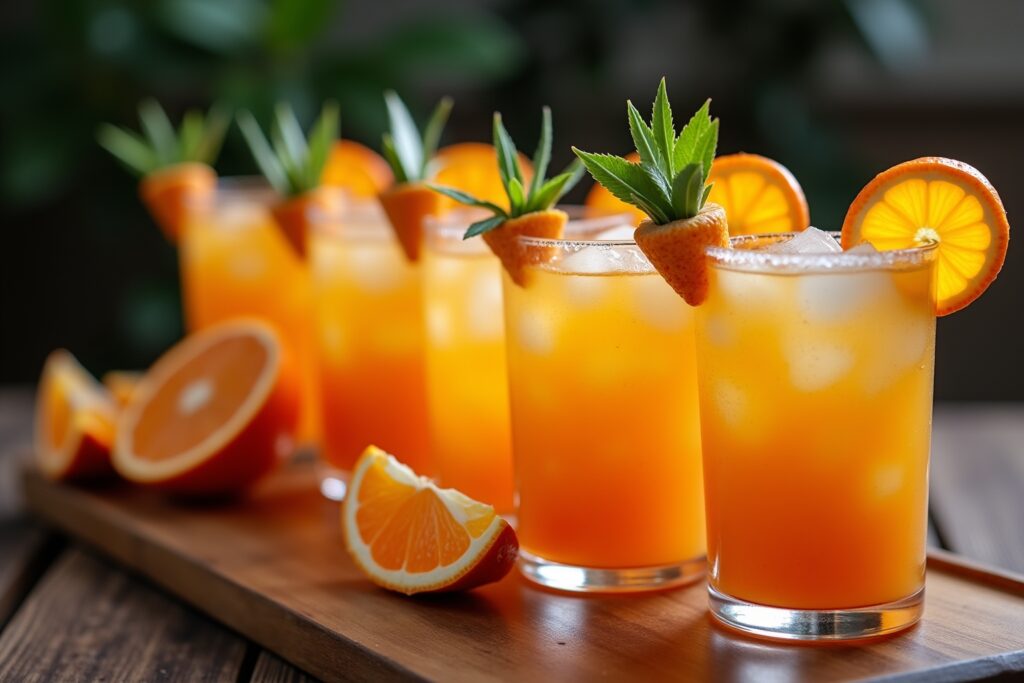
Elevate your cocktail game with vibrant citrus flavors by exploring seven essential orange cocktail recipes. Whether you’re a novice bartender or a seasoned mixologist, mastering these orange-infused creations will undoubtedly impress your guests and tantalize your taste buds.
These are the most popular Orange Cocktails products
Keine Produkte gefunden.The Allure of Orange in Cocktails
Orange, with its inherent sweetness, subtle tang, and aromatic zest, is a cornerstone ingredient in the world of mixology. Its versatility allows it to complement a vast array of spirits, from the robust notes of whiskey to the delicate profile of gin. The natural sugars in orange juice and the fragrant oils in its peel provide a complex flavor base that can be manipulated to create a spectrum of taste experiences, from refreshingly light to decadently rich.
Understanding Orange Cocktail Components
The success of an orange cocktail often hinges on the quality and balance of its components. Freshly squeezed orange juice is paramount; bottled varieties often lack the vibrant acidity and natural sweetness that fresh fruit provides. When working with liqueurs, consider their specific flavor profiles – triple sec offers a bright, clean orange essence, while Grand Marnier adds a cognac-based richness. Bitters, too, play a crucial role, with orange bitters being a natural pairing, but Angostura or Peychaud’s can offer intriguing complexity. The choice of spirit is equally important; its character should either harmonize with or provide a delightful counterpoint to the orange notes.
Key Orange Cocktail Recipes You Need to Master
1. The Classic Mimosa
The Mimosa is the quintessential brunch cocktail, celebrated for its simplicity and effervescent charm. This iconic drink relies on a delicate balance between sparkling wine and freshly squeezed orange juice. For the perfect Mimosa, you’ll need equal parts of each, typically chilled. Some prefer a slight variation, leaning more towards the sparkling wine for a drier profile, while others opt for a fruitier, sweeter taste with more orange juice. The key is the quality of your orange juice and the freshness of your sparkling wine, be it Champagne, Prosecco, or Cava.
- Ingredients:
- 1 part chilled Champagne (or Prosecco/Cava)
- 1 part chilled freshly squeezed orange juice
- Instructions:
- Gently pour the orange juice into a Champagne flute.
- Slowly top with the chilled sparkling wine. Avoid stirring vigorously to preserve the effervescence.
- Garnish with a thin slice of orange or a raspberry if desired.
2. The Sazerac (with an Orange Twist)
While traditionally made with rye whiskey, absinthe, Peychaud’s bitters, and a sugar cube, the Sazerac can be subtly enhanced with a touch of orange. The aromatic oils from an orange peel are essential for its signature fragrance. When preparing a Sazerac, after rinsing the glass with absinthe, you’ll express the oils from an orange peel over the drink. For a more pronounced orange flavor, consider using a dash of orange bitters alongside the Peychaud’s bitters. This adds a layer of citrus complexity without overshadowing the spirit’s character.
- Ingredients:
- 2 oz Rye Whiskey
- 1 sugar cube
- 2 dashes Peychaud’s Bitters
- 1 dash Orange Bitters (optional)
- Absinthe for rinsing
- Orange peel for garnish
- Instructions:
- Chill a rocks glass.
- In a mixing glass, muddle the sugar cube with the bitters.
- Add the rye whiskey and ice. Stir until well-chilled.
- Discard the ice from the chilled rocks glass and rinse it with absinthe, then discard the excess absinthe.
- Strain the mixture from the mixing glass into the prepared rocks glass.
- Express the oils from an orange peel over the drink and drop it in.
3. The Boulevardier
A sophisticated sibling to the Negroni, the Boulevardier swaps gin for whiskey, creating a warmer, richer profile. The orange element in a Boulevardier comes primarily from the Campari and the garnish. Campari, a bitter Italian liqueur, inherently possesses citrus notes, often with a prominent orange zest undertone. The traditional garnish of an orange peel is crucial for releasing its aromatic oils, which cut through the bitterness and meld with the whiskey and sweet vermouth. The interplay between the bold spirit, the herbal bitterness, and the citrus aroma makes the Boulevardier a complex and satisfying drink.
- Ingredients:
- 1 oz Bourbon or Rye Whiskey
- 1 oz Campari
- 1 oz Sweet Vermouth
- Orange peel for garnish
- Instructions:
- Combine all liquid ingredients in a mixing glass filled with ice.
- Stir well until thoroughly chilled.
- Strain into a rocks glass over a large ice cube.
- Express the oils from an orange peel over the drink and drop it in.
4. The Tequila Sunrise
This visually stunning cocktail is a crowd-pleaser, with its gradient effect and tropical flavors. The Tequila Sunrise is built on a foundation of tequila, orange juice, and grenadine. The vibrant red of the grenadine, when added last, sinks through the orange juice and tequila, creating the signature “sunrise” effect. The sweetness of the grenadine balances the tartness of the orange juice and the vegetal notes of the tequila. For an authentic experience, use fresh orange juice and good quality tequila. The visual appeal is as important as the taste.
- Ingredients:
- 2 oz Tequila
- 4 oz freshly squeezed orange juice
- 0.5 oz Grenadine
- Orange slice and cherry for garnish (optional)
- Instructions:
- Fill a highball glass with ice.
- Add tequila and orange juice and stir gently.
- Slowly pour the grenadine down the side of the glass so it settles at the bottom.
- Garnish with an orange slice and a cherry.
5. The French 75 (Orange Variation)
While the classic French 75 uses lemon juice, an orange variation offers a delightful twist. Replacing the lemon with fresh orange juice introduces a sweeter, softer citrus note that pairs beautifully with gin and sparkling wine. The gin provides botanical complexity, while the sparkling wine adds effervescence. The orange juice brightens the drink and adds a subtle sweetness. This variation is often garnished with a twist of orange peel, releasing its fragrant oils to complement the other ingredients.
- Ingredients:
- 1.5 oz Gin
- 0.75 oz freshly squeezed orange juice
- 0.5 oz Simple Syrup (adjust to taste based on orange sweetness)
- 3 oz Chilled Champagne or Dry Sparkling Wine
- Orange peel for garnish
- Instructions:
- Combine gin, orange juice, and simple syrup in a cocktail shaker with ice.
- Shake well until thoroughly chilled.
- Strain into a chilled Champagne flute.
- Top with chilled Champagne or sparkling wine.
- Garnish with a twist of orange peel.
6. The Old Fashioned (with Orange Notes)
The Old Fashioned, a true classic, can be subtly enhanced by orange. While the core ingredients remain whiskey, sugar, and bitters, the role of orange is multifaceted. Traditionally, an orange peel is expressed over the finished drink to release its aromatic oils, providing a fragrant citrus counterpoint to the spirit. For a more pronounced orange flavor, you can also incorporate a dash of orange bitters alongside the Angostura bitters. The goal is to complement, not overpower, the whiskey’s character with the citrus essence.
- Ingredients:
- 2 oz Bourbon or Rye Whiskey
- 1 sugar cube or 0.5 oz simple syrup
- 2-3 dashes Angostura Bitters
- 1 dash Orange Bitters (optional)
- Orange peel for garnish
- Instructions:
- In a rocks glass, muddle the sugar cube with bitters. If using simple syrup, add it with the bitters.
- Add the whiskey and a large ice cube or sphere.
- Stir gently for about 30 seconds until well-chilled.
- Express the oils from an orange peel over the drink and drop it in.
7. The Sidecar
The Sidecar is a sophisticated cocktail that masterfully balances sweet, sour, and spirit. While its core is brandy, Cointreau (an orange liqueur), and lemon juice, the orange component is central to its identity. Cointreau provides a bright, clean orange flavor that is both sweet and slightly bitter, complementing the richness of the brandy. Lemon juice adds the essential tartness to cut through the sweetness. Often served in a sugar-rimmed glass, the Sidecar is a complex and elegantly balanced drink where orange plays a starring role.
- Ingredients:
- 2 oz Cognac or Brandy
- 0.75 oz Cointreau (or other good quality orange liqueur)
- 0.75 oz freshly squeezed lemon juice
- Sugar for rimming the glass
- Orange peel for garnish
- Instructions:
- Rim a chilled coupe or martini glass with sugar by running an orange wedge around the rim and dipping it in sugar.
- Combine Cognac, Cointreau, and lemon juice in a cocktail shaker with ice.
- Shake well until thoroughly chilled.
- Strain into the prepared glass.
- Garnish with an orange twist.
Orange Cocktail Recipe Overview
| Cocktail Name | Primary Spirit | Key Orange Component | Flavor Profile | Occasion |
|---|---|---|---|---|
| Mimosa | Sparkling Wine | Fresh Orange Juice | Light, Effervescent, Sweet-Citrus | Brunch, Celebrations |
| Sazerac (Orange Variation) | Rye Whiskey | Orange Peel Oils, Orange Bitters | Spicy, Aromatic, Subtle Citrus | After Dinner, Sophisticated Gatherings |
| Boulevardier | Whiskey | Campari (inherent citrus), Orange Peel | Bitter-Sweet, Rich, Herbal | Evening Drinks, Social Occasions |
| Tequila Sunrise | Tequila | Fresh Orange Juice, Grenadine | Sweet, Fruity, Tropical | Casual Parties, Poolside |
| French 75 (Orange Variation) | Gin | Fresh Orange Juice, Orange Peel | Floral, Bubbly, Zesty | Festive Events, Apéritif |
| Old Fashioned (Orange Notes) | Whiskey | Orange Peel Oils, Orange Bitters | Spirit-Forward, Complex, Aromatic | Relaxed Evenings, Classic Cocktail Enthusiasts |
| Sidecar | Brandy/Cognac | Orange Liqueur (Cointreau), Orange Peel | Tangy, Sweet, Rich | Elegant Receptions, Sophisticated Settings |
Tips for Enhancing Your Orange Cocktails
Beyond the basic ingredients, several techniques can elevate your orange cocktails. Always use fresh citrus. The zest from an orange peel contains aromatic oils that significantly enhance the drink’s aroma and flavor. When expressing a peel, twist it over the surface of the drink to release these oils. Consider infusing your spirits with orange peel for a deeper flavor. For Mimosas and French 75 variations, the quality and temperature of your sparkling wine are crucial; ensure it’s well-chilled and enjoy its effervescence.
Choosing the Right Orange
Not all oranges are created equal when it comes to cocktails. For juicing, Valencia oranges are often preferred due to their high juice content and balanced sweetness. Navel oranges are also a good choice for their easy peeling and sweet flavor. For garnishes and expressing oils, a thick-skinned orange like a Seville orange can be excellent, though its juice is typically too bitter for direct use. The zest of most sweet oranges will suffice.
These are the latest Orange Cocktails products with the best ratings.
Keine Produkte gefunden.FAQ – Frequently Asked Questions about 7 Orange Cocktail Recipes
What is the best type of orange to use for cocktails?
For fresh juice, Valencia oranges are highly recommended for their sweetness and juiciness. Navel oranges are also a good option. For garnishes and expressing oils, thicker-skinned oranges can provide more aromatic zest, though the juice might be too bitter for direct use.
Can I use bottled orange juice instead of fresh?
While you can use bottled orange juice in a pinch, it is strongly advised against for optimal flavor. Bottled juices often contain added sugars and preservatives, and they lack the vibrant acidity and natural sweetness of freshly squeezed oranges, which are crucial for a balanced cocktail.
How can I make my orange cocktails less sweet?
To reduce sweetness, you can decrease the amount of simple syrup or liqueur used. Alternatively, you can increase the amount of citrus juice (like lemon or lime) or bitters to balance the sweetness. For drinks like the Mimosa, simply using less orange juice and more sparkling wine will result in a drier, less sweet cocktail.
What is the role of bitters in orange cocktails?
Bitters are essential for adding complexity and balancing the flavors in cocktails. Orange bitters are a natural pairing, enhancing the citrus notes. However, other bitters like Angostura or Peychaud’s can provide intriguing spicy or herbal undertones that complement the orange and the base spirit, adding depth and nuance.
How do I properly express an orange peel for a cocktail garnish?
To express an orange peel, hold the peel over the surface of your drink. Gently twist and squeeze the peel to release its aromatic oils. You can then rub the rim of the glass with the peel for an extra burst of aroma before dropping it into the drink as a garnish.
Can I make these orange cocktails ahead of time?
For most orange cocktails, it’s best to prepare them just before serving to maintain the freshness of the ingredients and the effervescence of any sparkling components. However, you can pre-juice your oranges and have your garnishes ready, which will speed up the mixing process.
What is the difference between Cointreau and Triple Sec?
Cointreau is a specific brand of triple sec, known for its high quality, smooth flavor, and balanced sweetness with a pronounced orange aroma. Traditional triple sec can vary widely in quality and sweetness; some can be sweeter and less refined than Cointreau. For cocktails where orange liqueur is a key component, like the Sidecar, using a premium option like Cointreau is often recommended.


