
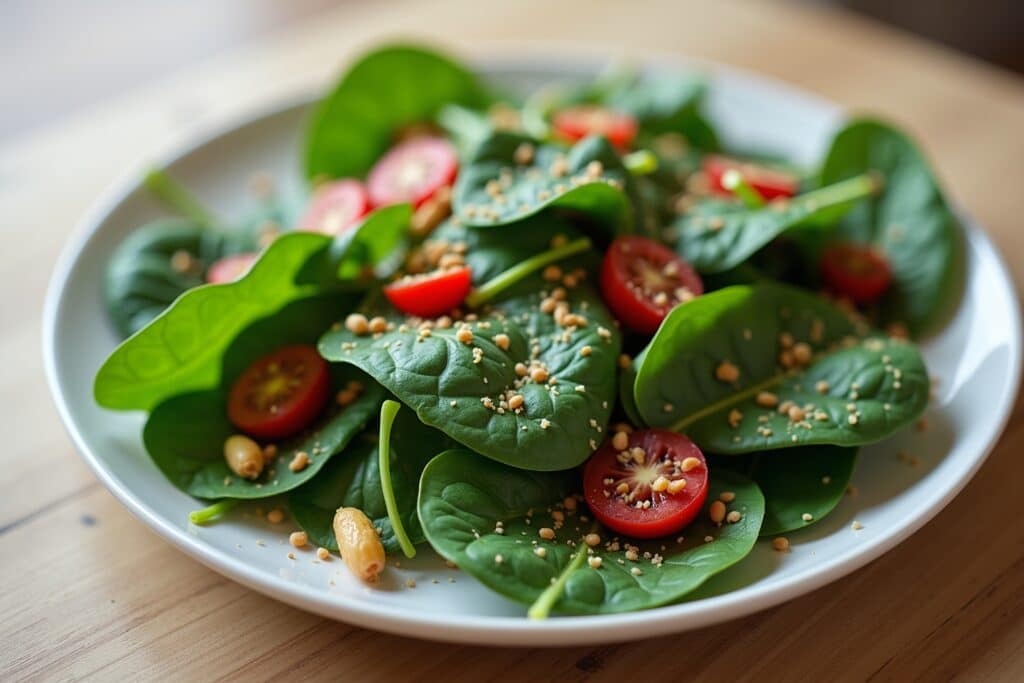
Elevate your meal with a vibrant and nutritious spinach salad, a versatile canvas for countless delicious combinations. Discover how to transform simple baby spinach into a culinary masterpiece that satisfies both your health goals and your palate.
These are the most popular Spinach Recipe products
Keine Produkte gefunden.The Foundation: Selecting and Preparing Your Spinach
Choosing the Right Spinach
For the best spinach salads, opt for fresh, vibrant baby spinach. Its tender leaves offer a delicate texture and a subtly sweet flavor, making it ideal for raw preparations. Look for spinach with deep green, unblemished leaves. Avoid any that appear wilted, yellowed, or slimy. If baby spinach isn’t available, regular spinach can be used, but it’s essential to wash and thoroughly dry it, as its leaves are tougher and may require chopping.
Washing and Drying Techniques
Proper washing is crucial to remove any grit or potential contaminants. Submerge the spinach in a large bowl of cool water, swishing gently to loosen debris. Lift the spinach out of the water, leaving the sediment behind. Repeat this process until the water runs clear. For effective drying, a salad spinner is your best friend. If you don’t have one, spread the leaves on clean kitchen towels and pat them dry gently. Excess moisture can dilute dressings and lead to a soggy salad.
Classic Spinach Salad Recipes and Their Appeal
The Timeless Baby Spinach Salad with Bacon and Eggs
This is a quintessential spinach salad that never goes out of style. The combination of crispy, salty bacon, hard-boiled eggs for protein and richness, and a tangy vinaigrette creates a harmonious balance of flavors and textures. The warmth from the slightly cooled bacon often wilts the spinach just enough to make it incredibly tender.
- Baby spinach leaves
- Crispy cooked bacon, crumbled
- Hard-boiled eggs, sliced or quartered
- Red onion, thinly sliced (optional)
- Creamy or tangy vinaigrette (e.g., balsamic, Dijon mustard-based)
Spinach Salad with Strawberries and Poppy Seed Dressing
A delightful springtime and summer favorite, this salad offers a refreshing sweetness. The juicy strawberries provide a burst of flavor, complemented by the nutty crunch of toasted almonds or pecans. The classic poppy seed dressing, with its slightly sweet and tangy profile, ties everything together beautifully.
- Baby spinach leaves
- Fresh strawberries, sliced
- Toasted slivered almonds or chopped pecans
- Feta cheese or goat cheese, crumbled (optional)
- Poppy seed dressing
The Hearty Spinach Salad with Chicken and Avocado
For a more substantial meal, this combination is hard to beat. Grilled or shredded chicken provides lean protein, while creamy avocado adds healthy fats and a luxurious texture. Adding other complementary ingredients like cherry tomatoes, corn, or black beans can further enhance its appeal and nutritional value.
- Baby spinach leaves
- Grilled or shredded chicken breast
- Ripe avocado, diced
- Cherry tomatoes, halved
- Corn kernels (fresh or roasted)
- A zesty lime or cilantro-lime dressing
Exploring Diverse Spinach Salad Creations
Fruity and Nutty Combinations
Beyond strawberries, consider other fruits like blueberries, raspberries, mandarin oranges, or dried cranberries for a touch of sweetness and tartness. Complement these with a variety of nuts and seeds such as walnuts, cashews, sunflower seeds, or pumpkin seeds for added crunch and healthy fats. Cheese varieties like blue cheese, gorgonzola, or shaved Parmesan can introduce a savory dimension.
Protein-Packed Powerhouse Salads
Spinach salads are excellent vehicles for various protein sources. Grilled salmon, shrimp, tofu, chickpeas, or lentils can transform a simple salad into a complete and satisfying meal. When incorporating protein, ensure its flavors and textures complement the spinach and other salad components.
Global Flavors and Inspirations
Don’t limit yourself to traditional Western-style salads. Explore Asian-inspired dressings like sesame-ginger or peanut dressing, and add ingredients like edamame, shredded carrots, and crispy noodles. Mediterranean influences can bring in ingredients like Kalamata olives, cucumber, bell peppers, and a lemon-herb vinaigrette. Middle Eastern touches might include pomegranate seeds, mint, and a sumac dressing.
The Art of the Perfect Dressing
Vinaigrettes: The Versatile Choice
Vinaigrettes, typically an emulsion of oil and vinegar or citrus juice, are the most common and adaptable dressing for spinach salads. The classic ratio is three parts oil to one part acid, but this can be adjusted to your preference. Common acids include red wine vinegar, balsamic vinegar, apple cider vinegar, and lemon or lime juice. Incorporate emulsifiers like Dijon mustard or honey to create a stable dressing.
Creamy Dressings: Indulgent and Flavorful
For a richer experience, creamy dressings made with yogurt, sour cream, mayonnaise, or blended avocado offer a delightful contrast. These dressings can be seasoned with herbs, garlic, or spices to create unique flavor profiles. Be mindful that creamy dressings can be higher in calories and fat, so use them in moderation if you are tracking your intake.
Herbs and Spices: The Flavor Enhancers
Fresh herbs are indispensable for adding brightness and complexity to any salad dressing. Parsley, chives, basil, mint, dill, and cilantro can all bring distinct notes. Spices like black pepper, garlic powder, onion powder, paprika, or a pinch of red pepper flakes can add warmth and depth.
Key Ingredients for Inspiring Spinach Salads
Vegetables: Beyond the Leafy Greens
Complement your spinach with a diverse range of vegetables. Crisp additions like cucumber, bell peppers, celery, and radishes provide textural contrast. Sweet elements such as corn, peas, and roasted root vegetables (like sweet potatoes or butternut squash) add depth. For a sharp bite, consider thinly sliced red onion, shallots, or chives.
Fruits: Sweetness and Acidity
Fruits introduce natural sweetness and a refreshing tartness. Berries (strawberries, blueberries, raspberries), stone fruits (peaches, nectarines), citrus segments (oranges, grapefruit), apples, pears, grapes, and dried fruits (cranberries, apricots, raisins) are excellent choices. Their vibrant colors also enhance the visual appeal of your salad.
Nuts and Seeds: Crunch and Nutrients
Toasted nuts and seeds are crucial for adding satisfying crunch and healthy fats. Almonds, walnuts, pecans, cashews, pistachios, sunflower seeds, pumpkin seeds, and sesame seeds are all fantastic options. Toasting them lightly brings out their flavor and improves their texture.
Cheeses: Savory Depth
Cheese can elevate a spinach salad from good to exceptional. Consider crumbly cheeses like feta, goat cheese, or blue cheese. Hard cheeses like Parmesan or Pecorino Romano, shaved or grated, offer a sharp, salty element. Milder cheeses like fresh mozzarella or ricotta can also be incorporated.
Proteins: The Satisfying Core
For a complete meal, protein is key. Grilled or roasted chicken, turkey, steak, salmon, tuna, shrimp, hard-boiled eggs, tofu, tempeh, lentils, beans (black beans, chickpeas, cannellini beans), and edamame are all excellent choices. Ensure the preparation method and seasoning of your protein complement the overall salad profile.
Spinach Salad in a Culinary Overview
| Category | Key Components | Flavor Profiles | Nutritional Benefits | Occasions |
|---|---|---|---|---|
| Light & Fresh | Baby spinach, berries, cucumber, light vinaigrette | Sweet, tangy, crisp | Vitamins A & C, antioxidants, hydration | Lunch, light dinner, side dish |
| Hearty & Filling | Spinach, grilled chicken/salmon, avocado, grains, robust dressing | Savory, creamy, satisfying | Lean protein, healthy fats, fiber, complex carbohydrates | Main course, post-workout meal |
| Celebratory & Elegant | Spinach, fruits (figs, pears), nuts (pistachios), artisan cheese (brie), balsamic glaze | Rich, complex, subtly sweet | Minerals, healthy fats, antioxidants | Dinner parties, special occasions |
| Global Fusion | Spinach, edamame, shredded carrots, mandarin oranges, sesame-ginger dressing | Umami, slightly sweet, nutty | Vitamins, minerals, plant-based protein | Adventurous lunches, potlucks |
Frequently Asked Questions about Köstliche Spinach Salad Recipes
What is the best type of spinach for salads?
Baby spinach is generally preferred for its tender leaves and mild flavor, making it ideal for raw consumption without requiring chopping. Its delicate texture also readily absorbs dressings.
How can I prevent my spinach salad from becoming watery?
Thoroughly washing and, most importantly, drying your spinach is crucial. Use a salad spinner or gently pat the leaves dry with clean towels. Also, dress the salad just before serving to prevent the leaves from wilting and releasing moisture.
Can I prepare spinach salad ahead of time?
It’s best to prepare the components of your spinach salad separately and assemble them just before serving. Keep the spinach, dressing, and any other wet ingredients (like tomatoes or fruits) stored apart to maintain freshness and crispness.
What are some good non-creamy dressing options for spinach salad?
Vinaigrettes are excellent. Classic options include balsamic, red wine, or apple cider vinaigrettes. For something different, try a lemon-herb vinaigrette, a sesame-ginger dressing, or a citrus-based dressing like lime or orange vinaigrette.
Are there any vegetables that don’t pair well with spinach salad?
While spinach is versatile, extremely bitter vegetables like raw Brussels sprouts might overwhelm the delicate spinach flavor if not balanced carefully. However, most common salad vegetables like cucumbers, tomatoes, peppers, and onions integrate well.
How can I make my spinach salad more filling?
Add substantial protein sources such as grilled chicken, salmon, shrimp, hard-boiled eggs, chickpeas, or lentils. Incorporating healthy fats from avocado, nuts, or seeds also increases satiety. Complex carbohydrates like quinoa or whole-grain croutons can also contribute to a filling salad.
Can I use frozen spinach in a salad?
Frozen spinach is not suitable for most raw spinach salad recipes. It undergoes a blanching process that alters its texture, making it mushy when thawed. Frozen spinach is best used in cooked dishes like gratins, dips, or soups.


