
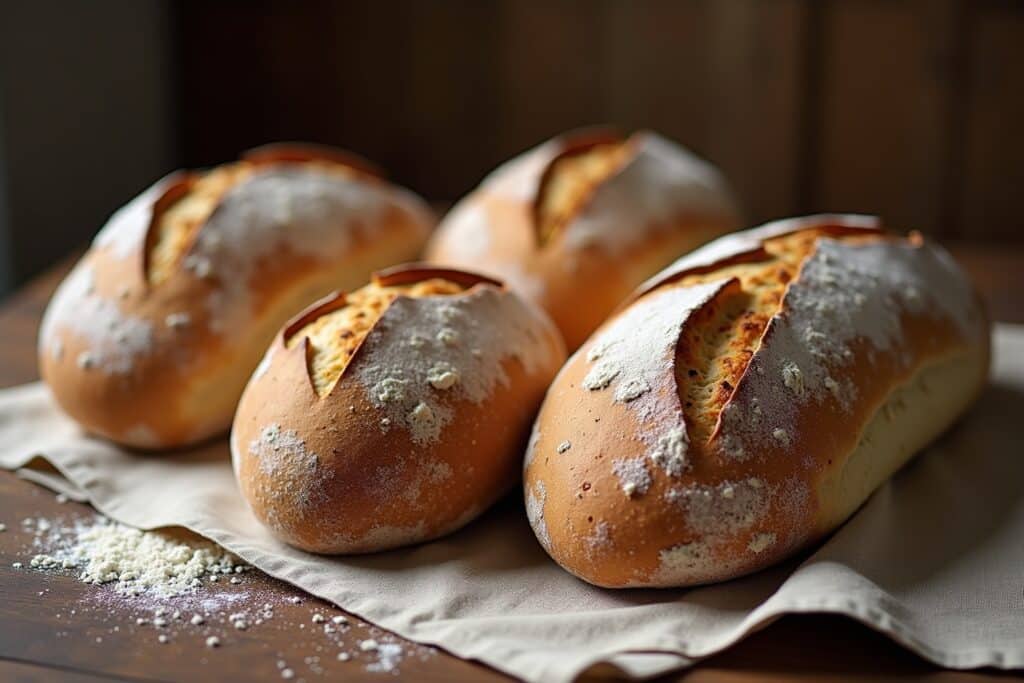
Discover how simple and rewarding it is to bake delicious bread at home with these five easy recipes. You’ll transform your kitchen into a warm bakery, filling it with the irresistible aroma of freshly baked goods, all without requiring advanced culinary skills.
These are the most popular Bread Recipe products
Keine Produkte gefunden.The Joy of Homemade Bread
Baking your own bread is an incredibly satisfying experience that connects you to a timeless tradition. Beyond the delightful taste and texture, homemade bread offers a superior nutritional profile compared to many store-bought options, as you control the ingredients. This guide focuses on straightforward recipes designed for home bakers, ensuring consistent success and encouraging you to experiment further.
Understanding Essential Bread-Making Ingredients
Before diving into the recipes, understanding the core ingredients is crucial for success:
- Flour: The backbone of bread. All-purpose flour is versatile, but bread flour has a higher protein content, yielding a chewier crumb. Whole wheat flour adds fiber and a nutty flavor.
- Yeast: The leavening agent that makes bread rise. Active dry yeast needs proofing (dissolving in warm liquid), while instant yeast can be mixed directly with dry ingredients.
- Water/Liquid: Hydrates the flour, activates the yeast, and contributes to the dough’s texture. Warm liquid (around 105-115°F or 40-46°C) is ideal for activating yeast.
- Salt: Enhances flavor, strengthens the gluten structure, and controls yeast activity.
- Sugar/Sweetener: Feeds the yeast, aids in browning, and adds subtle sweetness. Honey, maple syrup, or granulated sugar can be used.
- Fat (Optional): Such as butter or oil, adds tenderness, moisture, and improves shelf life.
5 Easy Homemade Bread Recipes
1. No-Knead Crusty Bread
This recipe is a revelation for beginners, producing a wonderfully crusty loaf with minimal effort. The magic lies in a long, slow rise, which develops flavor and texture without traditional kneading.
Ingredients:
- 3 cups all-purpose flour (plus more for dusting)
- 1/4 teaspoon instant yeast
- 1 1/2 teaspoons salt
- 1 1/2 cups lukewarm water
Instructions:
- In a large bowl, whisk together the flour, yeast, and salt.
- Add the lukewarm water and stir with a wooden spoon or spatula until just combined. The dough will be shaggy and wet.
- Cover the bowl tightly with plastic wrap or a damp kitchen towel. Let it sit at room temperature for 12 to 18 hours (or up to 24 hours).
- After the long rise, the dough will be bubbly and doubled in size. Turn the dough out onto a well-floured surface. It will be sticky.
- Gently shape the dough into a ball, being careful not to deflate it too much.
- Place the dough onto a piece of parchment paper. Cover loosely with plastic wrap or a towel and let it rest for 30 minutes while you preheat your oven.
- Preheat your oven to 450°F (230°C). Place a Dutch oven (with its lid) inside the oven to preheat for at least 30 minutes.
- Carefully remove the hot Dutch oven from the oven. Using the parchment paper, carefully lower the dough into the hot Dutch oven.
- Cover the Dutch oven with its lid and bake for 30 minutes.
- Remove the lid and bake for another 15-20 minutes, or until the crust is deep golden brown and the internal temperature reaches 200-210°F (93-99°C).
- Carefully remove the bread from the Dutch oven and let it cool completely on a wire rack before slicing.
2. Simple White Sandwich Bread
This is your go-to recipe for soft, fluffy white bread perfect for sandwiches, toast, and everyday enjoyment. It uses basic ingredients and requires a straightforward kneading process.
Ingredients:
- 3 cups all-purpose flour
- 1 tablespoon granulated sugar
- 1 teaspoon salt
- 1 packet (2 1/4 teaspoons) active dry yeast
- 1 cup lukewarm milk
- 2 tablespoons unsalted butter, softened
Instructions:
- In a large bowl, combine the flour, sugar, and salt.
- In a separate small bowl or liquid measuring cup, combine the lukewarm milk and active dry yeast. Let it sit for 5-10 minutes until it becomes foamy.
- Pour the yeast mixture into the flour mixture. Add the softened butter.
- Stir with a wooden spoon until a shaggy dough forms.
- Turn the dough out onto a lightly floured surface and knead for 8-10 minutes until smooth and elastic. You can also use a stand mixer with a dough hook.
- Lightly grease a large bowl with oil or butter. Place the dough in the bowl, turning to coat. Cover with plastic wrap or a damp kitchen towel and let it rise in a warm place for 1-1.5 hours, or until doubled in size.
- Punch down the dough gently. Grease and flour a 9×5 inch loaf pan.
- Shape the dough into a loaf and place it in the prepared pan. Cover loosely and let it rise again for 30-45 minutes, or until it has risen above the rim of the pan.
- Preheat your oven to 375°F (190°C).
- Bake for 30-35 minutes, or until the crust is golden brown and the internal temperature reaches 190-200°F (88-93°C).
- Remove the bread from the pan and let it cool completely on a wire rack before slicing.
3. Quick and Easy Soda Bread
Perfect for when you’re craving fresh bread but short on time, soda bread uses baking soda as a leavening agent, eliminating the need for yeast and long rising times. It has a wonderfully rustic texture.
Ingredients:
- 3 cups all-purpose flour
- 1 teaspoon baking soda
- 1 teaspoon salt
- 1 1/2 cups buttermilk
Instructions:
- Preheat your oven to 400°F (200°C). Grease and lightly flour a baking sheet or line it with parchment paper.
- In a large bowl, whisk together the flour, baking soda, and salt.
- Make a well in the center of the dry ingredients and pour in the buttermilk.
- Stir with a wooden spoon or spatula until just combined. The dough will be sticky and slightly wet. Do not overmix.
- Turn the dough out onto a lightly floured surface and gently shape it into a round loaf.
- Place the loaf on the prepared baking sheet.
- Using a sharp knife, score a deep cross on the top of the loaf.
- Bake for 30-40 minutes, or until the crust is golden brown and sounds hollow when tapped on the bottom.
- Transfer the bread to a wire rack to cool slightly before slicing and serving. Best enjoyed warm.
4. Rustic Whole Wheat Loaf
Embrace the wholesome goodness of whole wheat with this flavorful loaf. It offers a heartier texture and a rich, nutty taste, making it an excellent choice for health-conscious bakers.
Ingredients:
- 1 1/2 cups whole wheat flour
- 1 1/2 cups all-purpose flour
- 1 tablespoon granulated sugar or honey
- 1 teaspoon salt
- 1 packet (2 1/4 teaspoons) active dry yeast
- 1 1/4 cups lukewarm water
- 2 tablespoons olive oil
Instructions:
- In a large bowl, combine the whole wheat flour, all-purpose flour, sugar, and salt.
- In a separate bowl, dissolve the yeast in the lukewarm water and let it sit for 5-10 minutes until foamy.
- Pour the yeast mixture and olive oil into the dry ingredients.
- Stir with a wooden spoon until a shaggy dough forms.
- Turn the dough out onto a lightly floured surface and knead for 8-10 minutes until smooth and elastic. The dough may be slightly stickier than all-white flour doughs.
- Lightly grease a large bowl with olive oil. Place the dough in the bowl, turning to coat. Cover and let it rise in a warm place for 1-1.5 hours, or until doubled in size.
- Punch down the dough. Shape it into a round or oval loaf. You can also place it in a greased loaf pan.
- Place the shaped loaf on a parchment-lined baking sheet or in the pan. Cover and let it rise for another 30-45 minutes.
- Preheat your oven to 375°F (190°C).
- Bake for 30-40 minutes, or until the crust is golden brown and the internal temperature reaches 190-200°F (88-93°C).
- Cool completely on a wire rack before slicing.
5. Easy No-Yeast Quick Bread (Citrus & Herb)
This versatile quick bread eschews yeast altogether, relying on chemical leaveners for a tender crumb. Infused with citrus zest and herbs, it’s perfect for savory or sweet applications.
Ingredients:
- 2 cups all-purpose flour
- 2 teaspoons baking powder
- 1/2 teaspoon salt
- 1 tablespoon fresh herbs (like rosemary, thyme, or chives), finely chopped (optional)
- Zest of 1 lemon or orange
- 1 1/4 cups milk or buttermilk
- 1/4 cup olive oil or melted butter
Instructions:
- Preheat your oven to 375°F (190°C). Grease and flour a 9×5 inch loaf pan or an 8-inch round cake pan.
- In a large bowl, whisk together the flour, baking powder, salt, herbs (if using), and citrus zest.
- In a separate bowl or liquid measuring cup, whisk together the milk and olive oil or melted butter.
- Pour the wet ingredients into the dry ingredients.
- Stir with a wooden spoon or spatula until just combined. Be careful not to overmix; a few lumps are acceptable.
- Pour the batter into the prepared pan and spread evenly.
- Bake for 35-45 minutes for a loaf pan, or 25-35 minutes for a round cake pan, or until a toothpick inserted into the center comes out clean.
- Let the bread cool in the pan for 10 minutes before inverting it onto a wire rack to cool completely.
Baking Bread: Key Techniques and Tips for Success
Mastering a few fundamental techniques will elevate your homemade bread, regardless of the recipe:
- Accurate Measuring: Especially for flour, using a kitchen scale is the most precise method. If using cups, spoon the flour into the cup and level it off with a straight edge; do not scoop directly from the bag.
- Kneading Properly: Develops gluten, which gives bread its structure. Knead until the dough is smooth, elastic, and springs back when gently poked.
- Proofing Environment: Yeast thrives in warmth. A slightly warm oven (turned off, with the light on) or a sunny spot can create the ideal rising environment.
- Oven Temperature: Ensure your oven is accurately preheated. A reliable oven thermometer is a worthwhile investment.
- Cooling is Crucial: Allowing bread to cool completely on a wire rack prevents the bottom from becoming soggy and allows the internal structure to set.
A Quick Overview of Homemade Bread Recipes
| Recipe Name | Primary Leavening Agent | Kneading Required | Typical Bake Time | Texture Profile | Ideal Use Case |
|---|---|---|---|---|---|
| No-Knead Crusty Bread | Yeast (long fermentation) | Minimal (gentle shaping) | 45-50 minutes | Crisp crust, airy interior | Soups, stews, serving with cheese |
| Simple White Sandwich Bread | Yeast | Yes (8-10 minutes) | 30-35 minutes | Soft, fluffy, tender | Sandwiches, toast, children’s lunches |
| Quick and Easy Soda Bread | Baking Soda | No (minimal mixing) | 30-40 minutes | Dense, slightly crumbly, rustic | Breakfast, with butter and jam |
| Rustic Whole Wheat Loaf | Yeast | Yes (8-10 minutes) | 30-40 minutes | Hearty, chewy, nutty | Toasting, open-faced sandwiches, avocado toast |
| Easy No-Yeast Quick Bread (Citrus & Herb) | Baking Powder | No (minimal mixing) | 25-45 minutes | Tender, moist, cake-like | Savory appetizers, side bread, breakfast slices |
Frequently Asked Questions about 5 Easy Homemade Bread Recipes
What is the best flour for beginner bread bakers?
For most basic recipes, all-purpose flour is an excellent choice. It’s readily available and forgiving, producing good results for a variety of bread types. As you gain confidence, you can experiment with bread flour for a chewier texture or whole wheat flour for added fiber and flavor.
How do I know if my yeast is still active?
To test active dry yeast, dissolve it in about 1/4 cup of lukewarm water (around 105-115°F or 40-46°C) with a pinch of sugar. Let it sit for 5-10 minutes. If it becomes foamy and bubbly, it’s active and ready to use. If it doesn’t foam, it’s likely dead and should be discarded.
Why is my bread dough so sticky?
Dough stickiness can be due to several factors, including the type of flour used (whole wheat flours absorb more liquid), humidity levels, and hydration percentage. For recipes like the no-knead bread, a wet, sticky dough is desirable. For kneaded doughs, resist adding too much extra flour; instead, continue kneading, and the gluten development will make it more manageable. Lightly oiling your hands and work surface can also help.
What’s the difference between baking soda and baking powder?
Baking soda is a pure alkali that requires an acid (like buttermilk, yogurt, or lemon juice) and moisture to activate and produce carbon dioxide gas for leavening. Baking powder contains both an acid and an alkali, so it only needs moisture and heat to create leavening. Soda bread relies on the acidity of buttermilk, while quick breads often use baking powder for a double-acting lift.
Can I freeze homemade bread?
Yes, homemade bread freezes exceptionally well. Allow the bread to cool completely, then wrap it tightly in plastic wrap or aluminum foil, followed by a layer of freezer-safe bag or container. It can be frozen for up to 3 months. Thaw at room temperature or toast slices directly from frozen.
What does it mean to “punch down” dough?
“Punching down” dough refers to deflating the risen dough by gently pressing on it with your fist or knuckles. This process redistributes the yeast and sugars, releases large gas bubbles, and prepares the dough for its second rise or shaping. It helps create a finer, more even texture in the finished loaf.
How can I achieve a truly crusty exterior on my bread?
To achieve a superior crust, preheating your baking vessel (like a Dutch oven or pizza stone) is key. The intense initial heat helps the dough spring up and develop a crispier crust. Introducing steam into the oven during the initial baking phase also contributes significantly to a crackly crust. This can be done by placing a pan of hot water on the bottom rack of your oven or by spritzing the oven walls with water. For no-knead recipes, the use of a Dutch oven is highly recommended for its ability to trap steam.


