
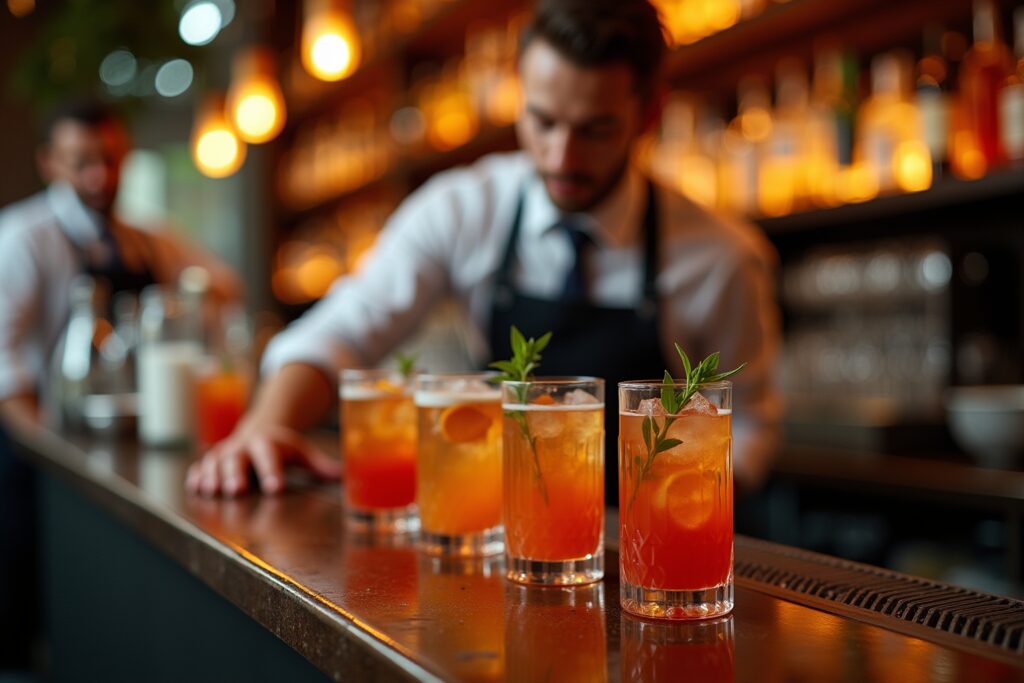
Unlock the secrets behind 15 essential bartender cocktail recipes that define classic mixology and elevate your home bar. Whether you’re a budding enthusiast eager to impress guests or a seasoned professional refining your repertoire, mastering these foundational drinks provides a robust understanding of flavor profiles, balancing techniques, and presentation standards crucial for any successful bartender.
These are the most popular Cocktail Recipes products
Keine Produkte gefunden.The Pillars of Bartending: Understanding Core Cocktail Categories
The world of cocktails can seem vast, but most drinks fall into fundamental categories that share common principles. Understanding these categories helps you deconstruct any cocktail and even create your own variations. We will explore 15 recipes that represent these essential pillars, giving you a comprehensive toolkit.
1. The Martini: A Study in Simplicity and Precision
The Martini, often considered the king of cocktails, exemplifies elegance through its extreme simplicity. It’s a testament to how the quality of ingredients and precise execution can create a powerful flavor experience. Traditionally made with gin and dry vermouth, its variation with vodka offers a cleaner, less botanical profile. The ratio of gin to vermouth is a matter of fervent debate among enthusiasts, with preferences ranging from a bone-dry (minimal vermouth) to a wetter (more vermouth) rendition.
- Classic Gin Martini: 2.5 oz Gin, 0.5 oz Dry Vermouth, Lemon twist or Olive garnish. Stirred, served up.
- Vodka Martini: 2.5 oz Vodka, 0.5 oz Dry Vermouth, Lemon twist or Olive garnish. Stirred, served up.
2. The Old Fashioned: Whiskey’s Timeless Embrace
The Old Fashioned is a true classic, a spirit-forward cocktail that celebrates the character of whiskey. Its preparation involves muddling sugar with bitters, adding whiskey, and stirring to achieve perfect dilution and temperature. The choice of whiskey—bourbon, rye, or even scotch—drastically alters the final taste. It’s a drink that requires patience and a gentle touch to coax out its complex layers.
- Old Fashioned: 2 oz Whiskey (Bourbon or Rye recommended), 1 sugar cube (or 1 tsp sugar), 2-3 dashes Angostura bitters, Orange peel garnish. Muddle sugar and bitters, add whiskey, stir with ice, garnish.
3. The Manhattan: Sophistication in a Glass
The Manhattan, a close cousin to the Old Fashioned, swaps whiskey for rye, vermouth for sweet vermouth, and adds a dash of bitters for a rich, complex, and slightly sweeter profile. Its assertive character and smooth finish make it a favorite among those who appreciate depth in their drinks. The addition of a Maraschino cherry is traditional and adds a touch of sweetness and visual appeal.
- Manhattan: 2 oz Rye Whiskey, 1 oz Sweet Vermouth, 2 dashes Angostura bitters, Maraschino cherry garnish. Stirred, served up.
4. The Negroni: A Bitter Masterpiece
The Negroni is a bold and iconic aperitif, celebrated for its perfectly balanced bitter, sweet, and botanical notes. Equal parts gin, Campari, and sweet vermouth create a strikingly red and intensely flavorful drink. Its invigorating bitterness makes it an excellent palate cleanser and a sophisticated choice for pre-dinner enjoyment. An orange peel garnish is essential for its aromatic contribution.
- Negroni: 1 oz Gin, 1 oz Campari, 1 oz Sweet Vermouth. Stirred with ice, served over ice, garnished with an orange peel.
5. The Daiquiri: Tropical Simplicity Perfected
The Daiquiri, at its core, is a deceptively simple yet profoundly satisfying cocktail showcasing the interplay of rum, lime juice, and sugar. The key to an outstanding Daiquiri lies in fresh ingredients and precise balancing of tartness and sweetness. Variations abound, but the classic iteration is a benchmark of clean, refreshing flavor.
- Classic Daiquiri: 2 oz White Rum, 0.75 oz Fresh Lime Juice, 0.5 oz Simple Syrup. Shaken, served up.
6. The Margarita: The Zesty Icon
The Margarita is a globally recognized tequila-based cocktail that balances the spirit’s earthy notes with the bright tang of lime and the subtle sweetness of orange liqueur. Its popularity stems from its versatility; it can be served on the rocks, blended, or even offered with a salt rim, which accentuates its complex flavors. The quality of the tequila and the freshness of the lime juice are paramount.
- Classic Margarita: 2 oz Tequila (Blanco or Reposado), 1 oz Fresh Lime Juice, 0.75 oz Orange Liqueur (e.g., Cointreau or Triple Sec). Shaken, served over ice, with an optional salt rim.
7. The Mojito: Refreshment Embodied
The Mojito is a vibrant and cooling Cuban highball, renowned for its refreshing blend of white rum, fresh mint, lime juice, sugar, and soda water. The ritual of gently muddling the mint is crucial to release its oils without bruising it excessively, preserving its fragrant aroma. It’s a testament to how simple ingredients, when combined with care, can create an incredibly invigorating drink.
- Mojito: 2 oz White Rum, 1 oz Fresh Lime Juice, 2 tsp Granulated Sugar, 6-8 Mint Leaves, Soda Water. Muddle mint and sugar, add lime juice and rum, shake with ice, top with soda water, garnish with mint sprig.
8. The Moscow Mule: The Ginger Kick
The Moscow Mule gained immense popularity not just for its taste but for its distinctive copper mug serving. This refreshing cocktail features vodka, spicy ginger beer, and lime juice. The ginger beer provides a zesty kick that pairs wonderfully with the clean taste of vodka and the tartness of lime. It’s a simple yet satisfying drink, perfect for warm weather.
- Moscow Mule: 2 oz Vodka, 4 oz Ginger Beer, 0.5 oz Fresh Lime Juice. Built in a copper mug with ice, garnished with a lime wedge.
9. The French 75: Bubbly Elegance
The French 75 is a sophisticated and celebratory cocktail that combines gin, fresh lemon juice, simple syrup, and Champagne. Its name is said to be inspired by a French field gun used during World War I, reflecting its potent yet delightful impact. The effervescence of the Champagne cuts through the citrus and spirit, making it incredibly sippable and elegant.
- French 75: 1.5 oz Gin, 0.75 oz Fresh Lemon Juice, 0.5 oz Simple Syrup, Top with Champagne. Shaken, strained into a Champagne flute, garnished with a lemon twist.
10. The Gimlet: Tart and Tangy Perfection
The Gimlet is a classic gin-based cocktail distinguished by its tart and refreshing flavor profile, derived from fresh lime juice and simple syrup. While some modern interpretations use Rose’s Lime Cordial, the original and arguably superior version relies on fresh lime. It’s a straightforward drink that highlights the quality of the gin and the balance of sweet and sour.
- Classic Gimlet: 2 oz Gin, 0.75 oz Fresh Lime Juice, 0.5 oz Simple Syrup. Shaken, served up.
11. The Sazerac: New Orleans’ Signature Sip
Hailing from New Orleans, the Sazerac is one of America’s oldest cocktails. It’s a potent and aromatic drink traditionally made with rye whiskey, absinthe (or a substitute), Peychaud’s bitters, and sugar. The glass is rinsed with absinthe, imparting a subtle but unmistakable aroma and flavor that defines this complex cocktail. It’s a slow sipper, meant to be savored.
- Sazerac: 2 oz Rye Whiskey, 1 sugar cube, 3 dashes Peychaud’s bitters, Absinthe rinse. Muddle sugar and bitters, add whiskey, stir with ice, strain into an absinthe-rinsed glass, garnish with a lemon peel.
12. The Whiskey Sour: The Perfect Balance of Sweet and Tart
The Whiskey Sour is a fundamental cocktail that perfectly balances the richness of whiskey with the tartness of lemon juice and the sweetness of sugar. Its classic rendition often includes egg white, which creates a silky texture and a beautiful foam cap, adding another dimension to the drinking experience. The inclusion of bitters further rounds out the flavor profile.
- Whiskey Sour (with Egg White): 2 oz Bourbon, 1 oz Fresh Lemon Juice, 0.75 oz Simple Syrup, 1 Egg White, 2 dashes Angostura bitters. Dry shake, then wet shake with ice, strain into a coupe glass, garnish with a cherry and orange slice.
13. The Cosmopolitan: The Pink Icon
The Cosmopolitan, often credited with its surge in popularity in the 1990s, is a vibrant and visually appealing cocktail. It combines vodka, cranberry juice, lime juice, and orange liqueur. The balance of tart, sweet, and citrus notes makes it a popular choice, and its distinctive pink hue adds to its appeal. It’s a modern classic that remains a favorite for its approachable flavor.
- Cosmopolitan: 1.5 oz Vodka, 0.75 oz Cranberry Juice, 0.5 oz Orange Liqueur, 0.5 oz Fresh Lime Juice. Shaken, served up, garnished with a lime peel or cranberry.
14. The Gin & Tonic: A Refreshing Staple
The Gin and Tonic is a ubiquitous and endlessly versatile cocktail. Its appeal lies in its simplicity and its refreshing nature. The botanicals in gin, combined with the crispness of tonic water and the citrus brightness of lime, create a universally loved drink. The quality of the gin and the tonic water can significantly influence the final taste, and garnishes can range from simple lime to more complex herbs and spices.
- Gin & Tonic: 2 oz Gin, 4 oz Tonic Water, Lime wedge garnish. Built in a highball glass with ice.
15. The Paloma: Tequila’s Zesty Companion
The Paloma is Mexico’s most popular tequila cocktail, offering a delightful alternative to the Margarita. It’s a simple yet incredibly refreshing drink made with tequila, grapefruit soda, and lime juice. The slight bitterness of the grapefruit soda perfectly complements the agave notes of tequila, creating a balanced and invigorating beverage. A salt rim is often added for an extra layer of flavor.
- Paloma: 2 oz Tequila (Blanco or Reposado), 4-5 oz Grapefruit Soda, 0.5 oz Fresh Lime Juice. Built in a highball glass with ice, optional salt rim, garnished with a lime wedge.
Cocktail Recipe Categorization and Key Characteristics
To further understand the nuances of these 15 bartender-approved recipes, consider their fundamental characteristics:
| Category | Primary Spirit | Flavor Profile Focus | Preparation Style | Typical Glassware |
|---|---|---|---|---|
| Spirit-Forward Classics | Whiskey, Gin, Rum, Tequila | Emphasizes the spirit’s character; balanced with bitters, vermouth, or citrus. | Stirred or Shaken | Coupe, Martini, Rocks Glass |
| Refreshing Highballs | Vodka, Gin, Rum, Tequila | Light, effervescent, and often citrus-forward; easy to drink. | Built | Highball, Collins Glass |
| Sour Family | Whiskey, Gin, Rum, Tequila | Balanced combination of spirit, citrus (sour), and sweetener (sweet). | Shaken | Coupe, Rocks Glass |
| Aperitifs | Gin, Campari, Vermouth | Often bitter or herbaceous, designed to stimulate the appetite. | Stirred | Rocks Glass, Coupe |
Essential Bartending Tools for Perfecting Your Cocktails
To consistently create these exceptional cocktails, having the right tools is indispensable. A bartender’s toolkit is designed for precision, efficiency, and the best possible outcome for each drink.
- Cocktail Shaker: Essential for chilling and diluting drinks that contain citrus juice or egg white. Boston and Cobbler shakers are the most common.
- Jigger: A measuring tool that ensures accurate proportions of spirits and mixers, critical for consistent taste.
- Bar Spoon: A long-handled spoon used for stirring cocktails, layering ingredients, and extracting garnishes.
- Muddler: Used to gently press fruits, herbs, and sugar to release their essential oils and juices without pulverizing them.
- Citrus Juicer: Freshly squeezed citrus juice is paramount for bright, balanced cocktails. A handheld citrus press is ideal.
- Strainer: Hawthorne and Julep strainers are used to separate ice and muddled ingredients from the liquid when pouring.
- Peeler/Channel Knife: For creating elegant citrus peels for garnishes, adding both visual appeal and aromatic oils.
The Art of Garnishing: Enhancing Aroma and Aesthetics
Garnishes are not merely decorative; they are an integral part of the cocktail experience, contributing to aroma, flavor, and visual appeal. A well-chosen garnish can transform a good drink into a great one. For these 15 recipes, consider the following:
- Citrus Peels (Lemon, Orange, Grapefruit): Expressing the oils over the drink releases aromatic compounds that enhance the overall sensory experience. Twist or curl for visual flair.
- Maraschino Cherries: Add a touch of sweetness and visual richness, particularly suited for spirit-forward drinks like the Manhattan.
- Mint Sprigs: Gently slapped to release their aroma, mint is crucial for drinks like the Mojito, offering a fragrant and cooling element.
- Olives: A classic garnish for Martinis, their briny flavor complements the spirit and vermouth.
- Lime Wedges/Wheels: Provide a fresh citrus aroma and can be squeezed into the drink for added tartness, common in Mules and Palomas.
These are the latest Cocktail Recipes products with the best ratings.
Keine Produkte gefunden.FAQ – Frequently Asked Questions about 15 Bartender Cocktail Recipes
What is the most important factor in making a great cocktail?
The most critical factor is the quality and freshness of your ingredients, especially your spirits, fresh citrus juices, and any fresh herbs or fruits. Precision in measurement is also paramount for achieving the intended balance of flavors.
Should I stir or shake my cocktails?
You should stir cocktails that are spirit-forward, meaning they contain mostly spirits and little to no citrus juice or dairy. This includes drinks like the Martini, Manhattan, Old Fashioned, and Negroni. Shaking is reserved for cocktails that contain citrus, dairy, or egg whites, as it chills, dilutes, and aerates the drink, creating a desirable texture.
What does “served up” mean in cocktail recipes?
“Served up” means a cocktail is strained over ice into a chilled glass without ice. This is typically done for cocktails like Martinis, Cosmopolitans, and Gimlets, resulting in a colder, more intensely flavored drink.
How do I prevent my cocktails from becoming too diluted?
Use good quality ice that is large and dense, as it melts slower. Ensure your glassware is pre-chilled. For stirred drinks, stir for a specific duration (typically 20-30 seconds) to achieve the correct dilution without over-diluting. For shaken drinks, shake vigorously but not excessively long.
What is simple syrup and how do I make it?
Simple syrup is a basic sweetener made by dissolving sugar in water. The standard ratio is 1:1 (one part sugar to one part water), heated gently until the sugar is fully dissolved, then cooled. Some bartenders prefer a 2:1 ratio for a richer syrup.
Why are some cocktails served in specific glasses?
The type of glassware used for a cocktail is chosen for both aesthetic and functional reasons. Stemmed glasses (like coupe or martini glasses) are used for drinks served “up” to keep them chilled and prevent transferring heat from your hand. Highball or Collins glasses are used for longer, often effervescent drinks, allowing space for plenty of ice and mixers.
What are bitters and how do they affect a cocktail?
Bitters are highly concentrated alcoholic extracts of botanicals, fruits, roots, and barks. They are used in very small quantities (dashes) to add complexity, depth, and balance to a cocktail. They don’t primarily add sweetness but rather enhance other flavors and add subtle aromatic nuances.


