
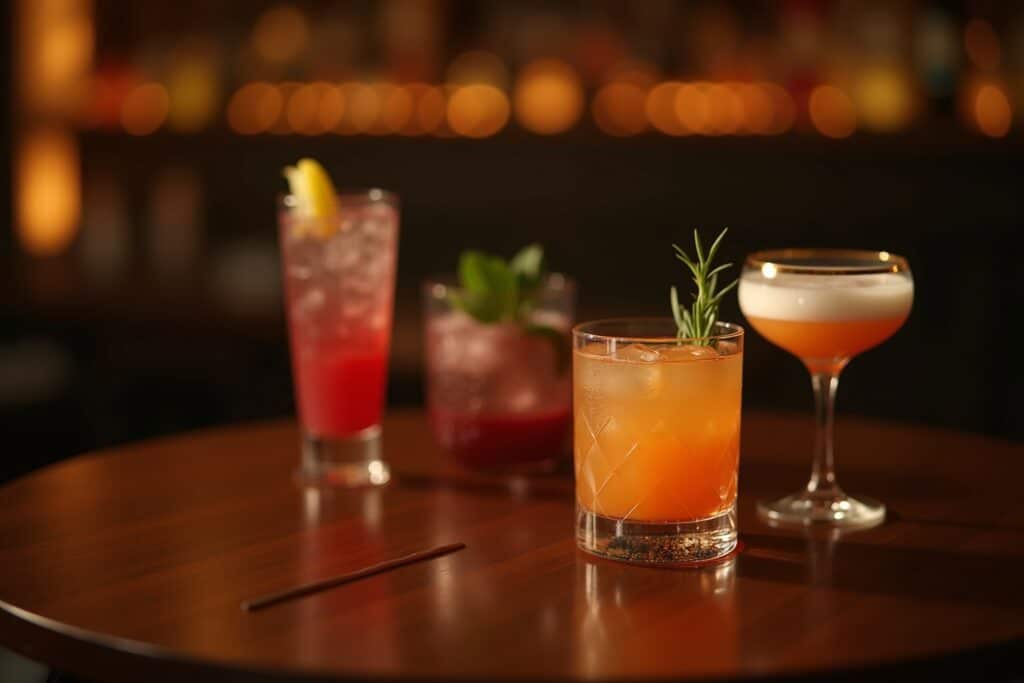
Elevate your home bar experience beyond the basics with these 14 advanced cocktail recipes, designed for the discerning palate and the ambitious mixologist. Mastering these creations will not only impress your guests but also deepen your understanding of complex flavor profiles and sophisticated techniques.
These are the most popular Cocktail Book products
Keine Produkte gefunden.The Art of Advanced Mixology: Beyond the Basics
Venturing into advanced cocktail creation means exploring nuanced ingredient pairings, precise layering techniques, and an understanding of historical cocktail evolution. These recipes are not just about following instructions; they are about understanding the ‘why’ behind each component and its contribution to the final sensory experience. You’ll delve into the world of homemade infusions, complex bitters, and the delicate balance of sweet, sour, bitter, and strong elements.
14 Advanced Cocktail Recipes to Master
1. The Vieux Carré
This New Orleans classic is a potent and complex blend, showcasing the harmonious marriage of rye whiskey, cognac, sweet vermouth, and Benedictine. Its depth comes from the interplay of these robust spirits, balanced by a few dashes of Peychaud’s and Angostura bitters. The preparation involves precise stirring to achieve perfect dilution and chilling, creating a spirit-forward sipper that rewards patience.
2. The Sazerac
Often considered America’s first cocktail, the Sazerac is an icon of New Orleans. It features rye whiskey (or sometimes cognac) as its base, sweetened with a sugar cube, and flavored with Peychaud’s bitters and absinthe. The ritualistic preparation, including rinsing the glass with absinthe and serving without ice, highlights the importance of aroma and subtle flavor integration. The characteristic anise notes from the absinthe, combined with the spicy rye and floral bitters, create an unforgettable experience.
3. The Penicillin
A modern classic, the Penicillin ingeniously balances smoky, sweet, and tart flavors. It typically uses a blend of blended Scotch whisky and Islay Scotch (for smokiness), lemon juice, and honey-ginger syrup. The defining characteristic is the float of peaty Islay Scotch on top, which you inhale as you sip, adding an aromatic layer of smoke that complements the citrus and honey. The honey-ginger syrup itself requires careful preparation to extract maximum flavor.
4. The Last Word
This emerald green cocktail is a beautifully balanced equal-parts mix of gin, Maraschino liqueur, Green Chartreuse, and fresh lime juice. Its complexity arises from the interplay of the herbaceous, slightly sweet gin, the cherry-like Maraschino, the intensely botanical and spicy Green Chartreuse, and the sharp tang of lime. Shaken vigorously and served straight up, it delivers a punchy, herbaceous, and surprisingly refreshing profile.
5. The Boulevardier
A close relative of the Negroni, the Boulevardier swaps gin for whiskey (usually bourbon or rye). This results in a warmer, richer, and spicier profile. It’s composed of equal parts whiskey, Campari, and sweet vermouth, stirred and served over ice, often with an orange peel garnish. The bitterness of the Campari is softened by the sweet vermouth and the robust character of the whiskey, creating a sophisticated and satisfying drink.
6. The Aviation
The Aviation is a delicate and visually stunning cocktail that showcases floral and fruity notes. It typically comprises gin, Maraschino liqueur, crème de violette, and fresh lemon juice. The crème de violette is key to its characteristic purple hue and its subtle floral aroma. Proper balancing of the ingredients is crucial to prevent it from becoming too sweet or too tart, resulting in an ethereal and complex drink.
7. The Corpse Reviver #2
Despite its ominous name, the Corpse Reviver #2 is a bright, refreshing, and surprisingly complex cocktail designed to, well, revive. It’s an equal-parts mix of gin, Lillet Blanc, Cointreau, fresh lemon juice, and a dash of absinthe. The absinthe rinse provides an aromatic lift, while the combination of gin, vermouth, and orange liqueur creates layers of botanical, citrus, and subtle anise notes. It’s shaken and served up, offering a sophisticated pick-me-up.
8. The Oaxaca Old Fashioned
A contemporary twist on the classic Old Fashioned, this version replaces whiskey with a combination of reposado tequila and mezcal. Agave nectar serves as the sweetener, and Angostura and orange bitters are used. The smoky, earthy notes of the mezcal and the slightly oaky character of the tequila, combined with the subtle sweetness and spice from the bitters, create a deeply flavorful and nuanced cocktail that highlights the complexity of agave spirits.
9. The Gin Basil Smash
This vibrant and herbaceous cocktail is a celebration of fresh ingredients. It features gin, fresh basil leaves, fresh lemon juice, and simple syrup. The key to its success lies in the aggressive muddling of the basil, which releases its aromatic oils, followed by a vigorous shake to emulsify the ingredients. The result is a bright, refreshing, and intensely fragrant cocktail with a beautiful green hue.
10. The French 75
A sophisticated and celebratory cocktail, the French 75 combines gin, fresh lemon juice, simple syrup, and is topped with Champagne or other dry sparkling wine. The effervescence of the sparkling wine lifts the citrus and gin, creating a light yet complex drink. It’s typically shaken with ice before being strained into a flute and topped with bubbly, making it a perfect aperitif.
11. The Paper Plane
This modern classic is celebrated for its perfect balance of bitter, sweet, sour, and herbal notes, achieved through equal parts of its four core ingredients: bourbon, Aperol, Amaro Nonino, and fresh lemon juice. The Aperol provides a gentle bitterness and orange zest, the Amaro Nonino offers a more complex herbal and slightly bittersweet profile, and the bourbon adds warmth and depth, all brightened by the lemon. It’s stirred and served up, creating a harmonious and intriguing drink.
12. The Martinez
Considered a precursor to the Martini, the Martinez is a richer, sweeter, and more complex cocktail. It typically uses Old Tom gin (a slightly sweeter gin than London Dry), sweet vermouth, maraschino liqueur, and Angostura bitters. The combination of these ingredients results in a spirit-forward drink with notes of cherry, botanicals, and subtle spice, offering a delightful exploration of gin’s diverse character.
13. The Naked and Famous
This visually striking cocktail, created by Joerg Meyer, is a vibrant yellow and boasts a complex flavor profile. It’s an equal-parts mix of mezcal, Aperol, Yellow Chartreuse, and fresh lime juice. The smoky mezcal stands up to the bitterness of the Aperol and the herbal sweetness of the Yellow Chartreuse, while the lime juice provides a necessary acidic counterpoint. Shaken and served up, it’s a bold and balanced creation.
14. The Lion’s Tail
This aromatic cocktail from the 1930s offers a robust and spicy profile. It features bourbon, allspice dram, fresh lime juice, and simple syrup. The allspice dram, a liqueur infused with allspice berries, provides a unique warmth and complex spice notes that perfectly complement the rich character of the bourbon and the tartness of the lime. Stirred and served up, it’s a sophisticated and invigorating choice.
Key Elements in Advanced Cocktail Creation
Mastering these advanced cocktails involves understanding several critical components:
- Spirit Quality: The base spirit is paramount. Using premium quality whiskies, gins, rums, tequilas, and other spirits provides a superior foundation for flavor.
- Balance: Achieving the perfect harmony between sweet, sour, bitter, and spirit is the hallmark of an advanced cocktail. This requires careful measurement and understanding of ingredient strengths.
- Technique: Shaking, stirring, muddling, and layering are not just actions but crucial techniques that affect dilution, texture, and temperature.
- Bitters: Understanding the role and flavor profiles of various bitters (Angostura, Peychaud’s, orange, mole, etc.) is essential for adding complexity and depth.
- Garnishes: While seemingly simple, the right garnish can enhance aroma and visual appeal. Citrus peels express oils, herbs add fragrance, and spices can contribute aromatic elements.
- Homemade Components: Many advanced recipes benefit from or require homemade syrups, infusions, or tinctures, allowing for unique flavor profiles.
Understanding Cocktail Structures and Archetypes
Advanced cocktail knowledge often involves recognizing and deconstructing classic cocktail structures:
- Sours: Spirit, citrus, sweetener (e.g., Whiskey Sour, Daiquiri). Advanced sours might incorporate additional modifiers or complex sweeteners.
- Stirred Cocktails: Typically spirit-forward, composed of spirits, liqueurs, vermouths, and bitters, stirred to achieve precise dilution and chilling (e.g., Old Fashioned, Manhattan, Vieux Carré).
- Tiki Cocktails: Characterized by the complex layering of rums, fruit juices, and syrups, often with exotic spices.
- Highballs and Fizzes: Lighter drinks built with a base spirit, a mixer (like soda water or ginger ale), and sometimes citrus or sweeteners. Advanced versions might involve house-made sodas or unique spirit combinations.
A Comparative Overview of Advanced Cocktail Profiles
| Cocktail Name | Primary Spirit(s) | Key Flavor Profile | Complexity Factor | Preparation Method |
|---|---|---|---|---|
| Vieux Carré | Rye Whiskey, Cognac | Rich, Spicy, Herbal, Sweet | High | Stirred |
| Sazerac | Rye Whiskey / Cognac | Anise, Spicy, Aromatic | High | Stirred (Absinthe Rinse) |
| Penicillin | Blended Scotch, Islay Scotch | Smoky, Honey, Ginger, Tart | Medium-High | Shaken (Float) |
| Last Word | Gin | Herbaceous, Tart, Slightly Sweet | Medium-High | Shaken |
| Boulevardier | Bourbon / Rye | Bitter, Sweet, Warm | Medium | Stirred |
| Aviation | Gin | Floral, Fruity, Tart | Medium | Shaken |
| Corpse Reviver #2 | Gin | Citrus, Botanical, Anise | Medium | Shaken (Absinthe Rinse) |
| Oaxaca Old Fashioned | Tequila, Mezcal | Smoky, Earthy, Agave Sweetness | Medium-High | Stirred |
| Gin Basil Smash | Gin | Herbaceous, Fresh, Citrus | Medium | Muddled & Shaken |
| French 75 | Gin | Citrus, Bubbly, Light | Medium | Shaken & Topped |
| Paper Plane | Bourbon | Bitter, Herbal, Tart, Sweet | Medium | Shaken |
| Martinez | Old Tom Gin | Sweet, Cherry, Botanical | Medium-High | Stirred |
| Naked and Famous | Mezcal | Smoky, Herbal, Bitter, Tart | High | Shaken |
| Lion’s Tail | Bourbon | Spicy, Tart, Rich | Medium | Stirred |
These are the latest Cocktail Book products with the best ratings.
Keine Produkte gefunden.FAQ – Frequently Asked Questions about 14 Advanced Cocktail Recipes
What is the most important factor when making an advanced cocktail?
The most critical factor is balance. Achieving the perfect equilibrium between the various flavor components – sweet, sour, bitter, and the spirit itself – is what distinguishes a great advanced cocktail from a mediocre one. This requires precise measurement and an understanding of how each ingredient interacts.
Do I need special equipment to make these advanced cocktails?
While a basic set of bar tools is essential (shaker, jigger, strainer, bar spoon), advanced cocktails might benefit from specialized tools like a muddler for releasing flavors from herbs and fruits, a fine-mesh strainer for double straining, and perhaps specialized ice molds for larger, slower-melting cubes. However, most recipes can be mastered with standard professional-grade barware.
What is the difference between shaking and stirring a cocktail, and when should I use each?
Shaking incorporates air into the cocktail, chills it rapidly, and dilutes it more quickly due to the agitation and ice fragmentation. It’s generally used for cocktails containing citrus juices, dairy, or egg whites. Stirring, conversely, provides a slower chilling and dilution process, resulting in a smoother, silkier texture. It is typically used for spirit-forward cocktails that do not contain citrus or other non-spirit ingredients, such as Manhattans or Martinis, to preserve their clarity and texture.
How can I create my own advanced cocktail recipes?
Creating your own advanced cocktails involves a deep understanding of flavor pairings and cocktail structures. Start by experimenting with classic templates, substituting spirits or modifiers. Learn about the flavor profiles of various liqueurs, bitters, and syrups. Always taste and adjust incrementally, paying attention to the balance of sweet, sour, bitter, and proof. Documenting your experiments will help you refine your creations.
What are ‘bitters’ and why are they important in advanced cocktails?
Bitters are highly concentrated alcoholic preparations infused with botanicals, fruits, spices, or roots. They are not meant to be consumed on their own but are used in small quantities (dashes) to add complexity, depth, and balance to cocktails. They can enhance existing flavors, introduce new aromatic dimensions, and cut through sweetness or richness, acting as a crucial balancing agent in many advanced recipes.
Are there any advanced cocktails that are beginner-friendly?
Yes, some advanced cocktails are more approachable for beginners. For example, the Boulevardier is a great starting point for those interested in stirred, spirit-forward drinks as its equal-parts ratio is easy to remember, and its flavors are robust. The Gin Basil Smash is also quite accessible due to its straightforward muddling and shaking technique, relying on fresh, vibrant ingredients.


