
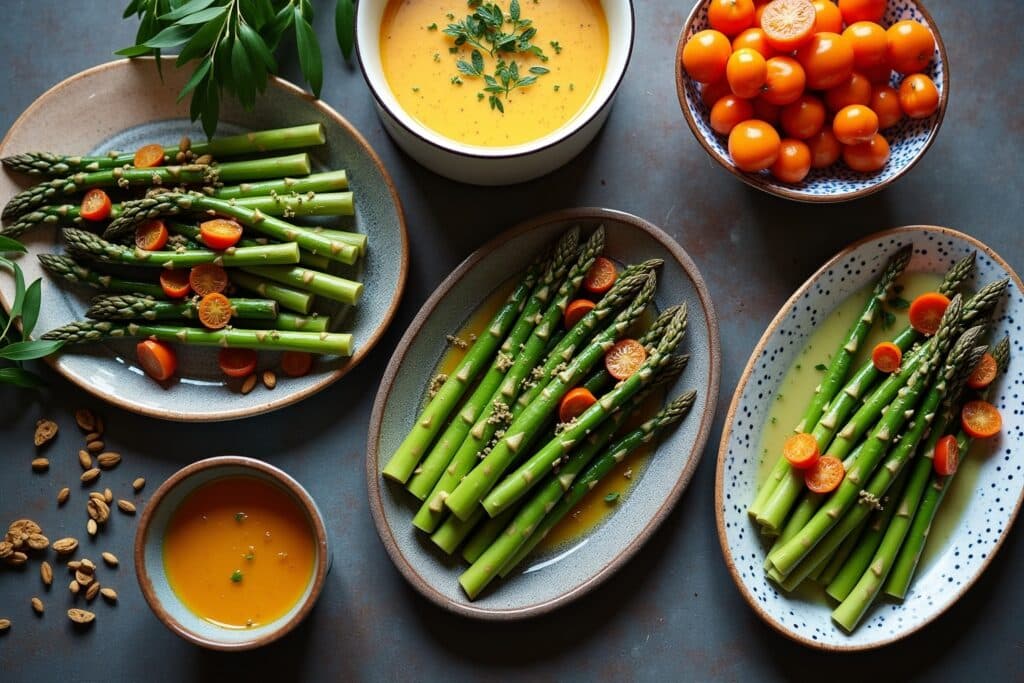
Elevate your spring and summer meals with these 15 fresh asparagus recipes, designed to showcase the crisp, vibrant flavor of this beloved seasonal vegetable. Whether you’re a novice cook or a seasoned culinary artist, you’ll discover delightful ways to prepare asparagus that go beyond the ordinary.
These are the most popular Asparagus recipes products
Keine Produkte gefunden.The Versatility of Fresh Asparagus
Asparagus, with its distinctive conical shape and tender spears, is a culinary chameleon. Its slightly earthy, subtly sweet flavor pairs wonderfully with a wide array of ingredients, from rich cheeses and savory meats to bright citrus and fragrant herbs. The way asparagus is cooked significantly impacts its texture and taste. Roasting caramelizes its natural sugars, yielding a nutty sweetness. Blanching or steaming preserves its bright green color and crisp-tender bite, making it ideal for salads and lighter dishes. Sautéing offers a quick and flavorful preparation, often infused with garlic and butter.
15 Fresh Asparagus Recipes to Inspire Your Kitchen
1. Roasted Asparagus with Parmesan and Lemon Zest
This is a quintessential asparagus preparation, highlighting its natural sweetness through roasting. Toss fresh asparagus spears with olive oil, salt, and pepper. Roast at 400°F (200°C) for 10-15 minutes, or until tender-crisp. Finish with a generous sprinkle of grated Parmesan cheese and fresh lemon zest for a bright, zesty finish.
2. Creamy Asparagus Soup
A luxurious and comforting soup that makes the most of asparagus. Sauté onions and garlic, then add chopped asparagus and vegetable or chicken broth. Simmer until the asparagus is tender, then blend until smooth. Stir in a touch of heavy cream or coconut milk for richness. Garnish with fresh chives or a swirl of crème fraîche.
3. Asparagus and Prosciutto Bundles
Elegant and simple, these bundles are perfect as an appetizer or side dish. Wrap blanched asparagus spears with thin slices of prosciutto. Brush with olive oil and bake at 375°F (190°C) for about 10-12 minutes, until the prosciutto is crispy and the asparagus is tender.
4. Asparagus and Pea Risotto
A creamy, comforting Italian classic. Sauté Arborio rice with shallots and white wine. Gradually add warm vegetable or chicken broth, stirring until absorbed. Stir in blanched asparagus pieces and fresh peas towards the end of cooking. Finish with Parmesan cheese and a knob of butter.
5. Lemon-Garlic Sautéed Asparagus
A quick and flavorful side dish that’s ready in minutes. Heat olive oil and butter in a skillet over medium-high heat. Add minced garlic and sauté until fragrant. Add asparagus spears and cook, stirring occasionally, until bright green and tender-crisp, about 5-7 minutes. Squeeze fresh lemon juice over the top before serving.
6. Asparagus Tart with Goat Cheese and Thyme
A beautiful and delicious savory tart. Use store-bought puff pastry or a homemade tart dough. Arrange blanched asparagus spears over a base of creamy goat cheese, seasoned with salt, pepper, and fresh thyme. Bake until the pastry is golden brown and the asparagus is tender.
7. Grilled Asparagus with Balsamic Glaze
Grilling imparts a wonderful smoky flavor to asparagus. Toss spears with olive oil, salt, and pepper. Grill over medium-high heat for 4-6 minutes, turning occasionally, until tender-crisp with grill marks. Drizzle with a balsamic glaze before serving.
8. Asparagus and Shrimp Scampi
A light yet satisfying pasta dish. Sauté shrimp and asparagus in a garlic-butter sauce with white wine and lemon juice. Toss with your favorite pasta, such as linguine or spaghetti.
9. Asparagus and Ricotta Stuffed Shells
A vegetarian take on stuffed shells. Combine ricotta cheese with finely chopped sautéed asparagus, Parmesan cheese, garlic, and herbs. Stuff jumbo pasta shells and bake in marinara sauce until bubbly and heated through.
10. Asparagus and Bacon Salad
A refreshing salad with a savory crunch. Blanch asparagus spears and cut into bite-sized pieces. Combine with crumbled cooked bacon, hard-boiled eggs, and your favorite vinaigrette. Red onion and cherry tomatoes also make great additions.
11. Asparagus Frittata
A versatile breakfast, brunch, or light lunch option. Sauté asparagus pieces with onions and garlic. Whisk eggs with milk or cream, salt, pepper, and herbs. Pour over the asparagus mixture in an oven-safe skillet and cook on the stovetop until the edges are set, then transfer to a preheated oven to finish cooking through. Top with cheese if desired.
12. Stir-Fried Asparagus with Ginger and Soy Sauce
A quick and healthy Asian-inspired dish. Stir-fry asparagus spears with grated fresh ginger, garlic, and a sauce made from soy sauce, sesame oil, and a touch of honey or maple syrup. Add other vegetables like bell peppers or snap peas for extra color and nutrients.
13. Asparagus and Feta Phyllo Triangles
Crispy, savory bites perfect for entertaining. Combine chopped blanched asparagus with crumbled feta cheese, dill, and a hint of lemon zest. Spoon the mixture onto layers of buttered phyllo dough and fold into triangles. Bake until golden and crisp.
14. Creamed Asparagus
A classic, comforting side dish. Blanch asparagus until tender-crisp. Prepare a simple béchamel sauce and stir in the asparagus. Season with salt, pepper, and a pinch of nutmeg. Top with breadcrumbs and bake until golden.
15. Asparagus and Ham Casserole
A hearty and satisfying casserole. Layer blanched asparagus spears and diced ham in a baking dish. Pour over a creamy sauce (like a condensed cream of mushroom or celery soup, or a homemade cheese sauce) and top with breadcrumbs or cheese. Bake until bubbly and heated through.
Understanding Asparagus Preparation Techniques
The preparation method you choose for asparagus significantly influences its final texture and flavor profile. Understanding these techniques will help you select the best recipe for your desired outcome.
- Roasting: High heat caramelizes the natural sugars in asparagus, resulting in a tender interior and slightly crispy, nutty exterior. It’s a simple method that brings out a rich flavor.
- Steaming: A gentle cooking method that preserves the vibrant green color and crisp-tender texture of asparagus. It’s ideal for salads or when you want a lighter preparation.
- Sautéing: Quick cooking in a skillet with fat (like olive oil or butter) and aromatics. This method infuses flavor and cooks the asparagus evenly, maintaining a slight bite.
- Grilling: Imparts a smoky char and tenderizes the spears. Direct heat on the grill creates appealing grill marks and a unique flavor.
- Blanching: Briefly immersing asparagus in boiling water, followed by an ice bath, sets the color and partially cooks the vegetable, making it tender-crisp and ready for other preparations like salads or fillings.
Nutritional Benefits of Fresh Asparagus
Beyond its culinary appeal, fresh asparagus is a nutritional powerhouse. It is an excellent source of essential vitamins and minerals, including Vitamin K, which is crucial for bone health and blood clotting. Asparagus also provides a good amount of Vitamin A, Vitamin C, folate, and fiber. Its spears contain antioxidants like glutathione, known for its detoxification properties, and coumarins, which may have anti-inflammatory effects.
A Quick Guide to Asparagus Varieties and Selection
While green asparagus is the most common, you might also encounter white and purple varieties. Green asparagus is harvested when the spears are young and tender. White asparagus, grown in darkness to prevent chlorophyll development, has a milder, more delicate flavor and a tender texture. Purple asparagus is similar to green but often sweeter with a slightly fruity note.
When selecting fresh asparagus, look for firm, straight spears with tightly closed tips. Avoid spears that are limp, wilted, or have open, woody tips. The thickness of the spears doesn’t necessarily indicate tenderness; thinner spears tend to cook faster, while thicker ones can be just as tender when cooked properly.
Table: Asparagus Recipe Categories and Attributes
| Category | Typical Preparation | Flavor Profile | Occasion Suitability | Key Ingredients |
|---|---|---|---|---|
| Quick Sides | Sautéed, Roasted, Grilled | Bright, Garlicky, Zesty | Weeknight Meals, Potlucks | Garlic, Lemon, Olive Oil, Parmesan |
| Hearty Mains | Risotto, Casserole, Pasta Dishes | Rich, Creamy, Savory | Family Dinners, Comfort Food | Rice, Pasta, Cheese, Cream, Ham |
| Appetizers & Starters | Bundles, Tarts, Phyllo Triangles | Elegant, Savory, Crispy | Parties, Gatherings, Brunch | Prosciutto, Goat Cheese, Feta, Phyllo Dough |
| Soups & Salads | Blended Soups, Tossed Salads | Fresh, Light, Verdant | Lunches, Light Dinners, Spring Meals | Broth, Cream, Peas, Bacon, Eggs |
These are the latest Asparagus recipes products with the best ratings.
Keine Produkte gefunden.FAQ – Frequently Asked Questions about 15 Fresh Asparagus Recipes
How do I prepare asparagus so it isn’t woody?
To avoid woody asparagus, snap off the tough, woody ends. Hold a spear near the bottom and bend it; it will naturally break at the point where the tender part begins and the woody part ends. Alternatively, you can use a knife to cut off the bottom inch or so.
Can I prepare asparagus ahead of time?
Yes, you can prepare some asparagus recipes ahead of time. Blanched or steamed asparagus can be stored in the refrigerator for a day or two and then reheated or added to dishes. Roasted asparagus can also be made ahead, but it’s best enjoyed fresh for optimal texture.
What are the best seasonings for asparagus?
Asparagus pairs wonderfully with a variety of seasonings. Classic pairings include garlic, lemon zest or juice, Parmesan cheese, salt, and black pepper. Other herbs like dill, parsley, chives, and thyme also complement its flavor. For a richer taste, consider bacon, prosciutto, or a touch of chili flakes.
How long does it take to cook asparagus?
Cooking time for asparagus varies depending on the preparation method and the thickness of the spears. Generally, sautéing or stir-frying takes 5-7 minutes, roasting takes 10-15 minutes, and grilling takes 4-6 minutes. Steaming typically takes 3-5 minutes. The key is to cook it until it’s tender-crisp, meaning it has some bite but is no longer raw.
Can I freeze fresh asparagus?
Yes, you can freeze fresh asparagus. It’s best to blanch it first. Wash and trim the asparagus, then blanch in boiling water for 2-3 minutes, followed by an immediate plunge into an ice bath to stop the cooking. Drain thoroughly, pat dry, and freeze in airtight containers or freezer bags. Frozen asparagus is best used in cooked dishes like soups or casseroles, as its texture may change upon thawing.
What’s the difference between thin and thick asparagus spears?
Thin asparagus spears are generally more tender and cook faster. They are excellent for quick sautéing, grilling, or eating raw in salads. Thick asparagus spears have a more substantial texture and can hold up better to longer cooking methods like roasting or braising. While they may seem tougher, they can be just as tender as thin spears when cooked properly, and they often have a more pronounced asparagus flavor.
Are there any health concerns related to eating asparagus?
For most people, asparagus is a healthy and safe food. However, some individuals may experience a distinct odor in their urine after consuming asparagus due to the breakdown of asparagusic acid. This is a harmless byproduct and does not indicate a health problem. People with certain kidney conditions might need to moderate their intake of asparagus due to its vitamin K content, but this is rarely an issue for the general population.


