
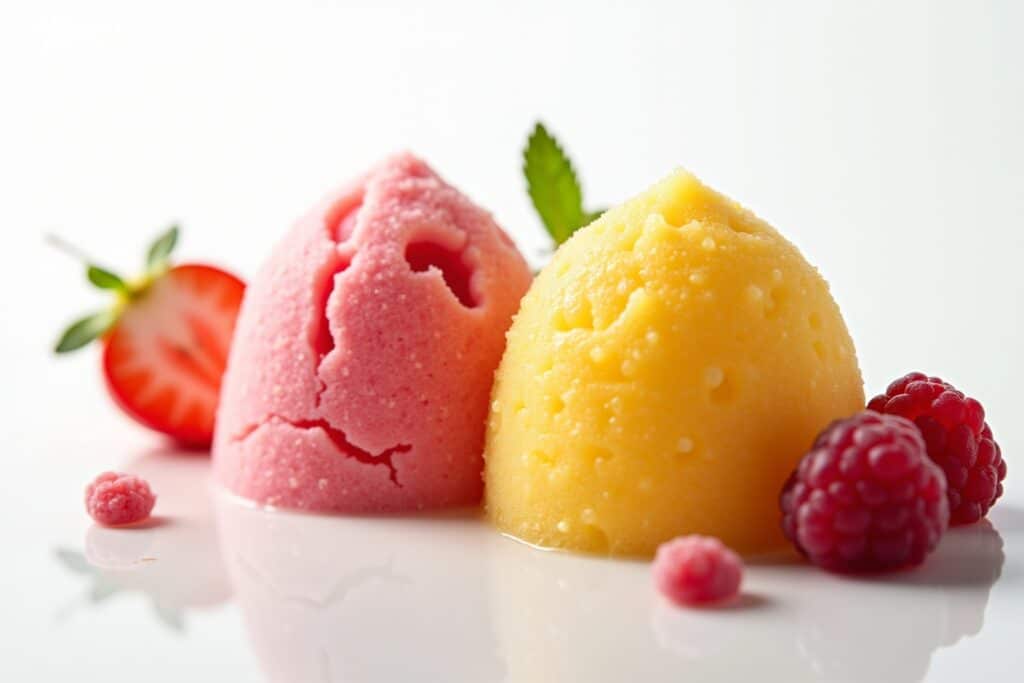
Seeking refreshing, dairy-free dessert options? You’ve discovered the ultimate guide to 17 delightful sorbet recipes, meticulously curated to satisfy diverse palates and dietary needs. This compilation focuses on vibrant flavors and simple preparations, empowering you to craft exquisite frozen treats right in your own kitchen.
These are the most popular Sorbet Recipes products
Keine Produkte gefunden.The Art and Science of Perfect Sorbet
Sorbet, at its core, is a frozen dessert made from fruit puree or fruit juice, sugar, and water. Unlike ice cream, it contains no dairy, making it a naturally vegan and lactose-free option. The magic of sorbet lies in its intensely fruity flavor and light, palate-cleansing texture. Achieving the perfect consistency—smooth, not icy, and easily scoopable—is a delicate balance of ingredients and technique. Sugar plays a crucial role not only for sweetness but also as an antifreeze, lowering the freezing point of the mixture and preventing large ice crystals from forming. The ratio of sugar to fruit and water is paramount, and understanding fruit’s natural sugar content is key to avoiding an overly sweet or bland result.
Essential Ingredients and Equipment for Sorbet Success
To embark on your sorbet-making journey, you’ll need a few key components. The foundation of any great sorbet is high-quality fruit. Whether you opt for fresh, ripe seasonal produce or high-quality frozen fruits, their inherent flavor will shine through. A simple syrup, made by dissolving sugar in water, is often preferred over granulated sugar as it integrates more smoothly into the fruit mixture. Lemon or lime juice is frequently added to brighten the fruit’s natural flavors and provide a slight tang that cuts through the sweetness.
Equipment-wise, a good blender or food processor is essential for achieving a silky-smooth fruit puree. While an ice cream maker is the most convenient tool for consistently smooth sorbet, it’s not strictly necessary. Many recipes can be adapted for a no-churn method, requiring periodic scraping and refreezing to break up ice crystals. A fine-mesh sieve can be helpful for straining purees to remove any pulp or seeds, ensuring a refined texture. Airtight containers are vital for storing your finished sorbet to prevent freezer burn.
A Symphony of Flavors: 17 Sorbet Recipes to Explore
This collection offers a spectrum of flavors, from classic fruit combinations to more adventurous pairings. Each recipe is designed to highlight the natural essence of its core ingredients, providing a refreshing and sophisticated dessert experience.
1. Classic Raspberry Sorbet
A timeless favorite, this raspberry sorbet bursts with vibrant, tart-sweet flavor. Using ripe raspberries, a simple syrup, and a touch of lemon juice creates a refreshing dessert perfect for any occasion.
2. Zesty Lemon Sorbet
The quintessential palate cleanser, lemon sorbet is a marvel of simplicity. Freshly squeezed lemon juice, sugar, and water are all that’s needed to create a bright, invigorating treat that perfectly balances acidity and sweetness.
3. Tropical Mango Sorbet
Escape to the tropics with this luscious mango sorbet. The natural sweetness and creamy texture of ripe mangoes lend themselves beautifully to a dairy-free frozen dessert. A hint of lime enhances its tropical profile.
4. Refreshing Strawberry Sorbet
Sweet, ripe strawberries form the base of this delightful sorbet. It captures the pure essence of summer berries, offering a light and intensely fruity flavor that’s incredibly satisfying.
5. Tangy Lime Sorbet
Similar to lemon but with a distinctively tropical edge, lime sorbet is incredibly invigorating. Its sharp, zesty character makes it a perfect accompaniment to rich meals or a stand-alone refreshing treat.
6. Blueberry Bliss Sorbet
Blueberries offer a beautiful color and a nuanced flavor that translates wonderfully into sorbet. This recipe leverages the natural sweetness and slight tartness of blueberries for a delightful frozen dessert.
7. Watermelon Mint Sorbet
The ultimate in summer refreshment, watermelon sorbet is incredibly hydrating and light. The addition of fresh mint adds an extra layer of cool crispness, making it exceptionally revitalizing.
8. Peach & Ginger Sorbet
The delicate sweetness of ripe peaches is beautifully complemented by the subtle warmth and spice of fresh ginger. This combination offers a sophisticated and warming sorbet experience.
9. Passion Fruit Sorbet
With its distinctively tropical and tangy flavor profile, passion fruit sorbet is an exotic delight. Its vibrant taste is both bold and refreshing, offering a unique dessert experience.
10. Blackberry & Lavender Sorbet
This elegant sorbet combines the deep, slightly tart flavor of blackberries with the aromatic, floral notes of lavender. It’s a sophisticated and surprisingly harmonious pairing.
11. Pineapple Coconut Sorbet
A taste of the islands, this sorbet blends the tropical sweetness of pineapple with the creamy, subtle flavor of coconut milk (though the base remains dairy-free). It’s a creamy, dreamy, dairy-free indulgence.
12. Cantaloupe & Basil Sorbet
The mild sweetness of cantaloupe is elevated by the fresh, herbaceous notes of basil. This unexpected combination creates a uniquely refreshing and aromatic sorbet.
13. Cherry Sorbet
Whether you use sweet or tart cherries, this sorbet captures their rich, distinct flavor. It’s a classic fruit flavor that’s always a crowd-pleaser.
14. Grapefruit & Rosemary Sorbet
The slightly bitter, citrusy notes of grapefruit are balanced by the aromatic, pine-like essence of rosemary. This sophisticated sorbet is both complex and incredibly refreshing.
15. Plum & Star Anise Sorbet
The deep, rich flavor of plums pairs wonderfully with the warm, licorice-like spice of star anise. This sorbet offers a unique and comforting flavor profile.
16. Mixed Berry Sorbet
Combine the best of several berries—strawberries, blueberries, raspberries, blackberries—for a complex, fruity explosion. This recipe is a fantastic way to use up a medley of fruits.
17. Cucumber Lime Sorbet
An incredibly light and hydrating option, cucumber lime sorbet is subtly sweet with a refreshing cucumber essence and a zesty lime finish. It’s perfect for a hot day or as a palate cleanser.
Sorbet Making Methodologies: From Ice Cream Maker to No-Churn
The method you choose to make your sorbet will influence its final texture. Using an ice cream maker is the most straightforward approach. You’ll prepare your fruit base, chill it thoroughly, and then churn it according to the machine’s instructions. This process incorporates air and freezes the mixture evenly, resulting in a smooth, creamy consistency.
For those without an ice cream maker, the no-churn method requires more hands-on effort but yields delicious results. After blending and chilling your base, you pour it into a freezer-safe container. Every 30-45 minutes for the first few hours, you’ll remove the container from the freezer and vigorously stir or whisk the mixture. This breaks up the ice crystals as they form, mimicking the churning process and resulting in a smoother texture.
A food processor can also be used for a quick sorbet. Blend frozen fruit until it resembles a soft-serve consistency. While this method is fast, the texture can sometimes be icier than that achieved with an ice cream maker or careful no-churn stirring. Experimentation is key to finding your preferred texture.
Sorbet Recipe Categories at a Glance
| Flavor Profile | Key Ingredients | Preparation Style | Best Served |
|---|---|---|---|
| Citrus & Bright | Lemon, Lime, Grapefruit | Simple syrup, often with herbs | Palate cleanser, light dessert |
| Berry Medleys | Raspberry, Strawberry, Blueberry, Blackberry | Fresh or frozen fruit puree | Dessert, accompaniment to baked goods |
| Tropical Escapes | Mango, Pineapple, Passion Fruit, Coconut | Blended fruits, sometimes with juice | Dessert, refreshing treat on warm days |
| Melon & Light | Watermelon, Cantaloupe, Cucumber | Juiced or pureed, often with fresh herbs | Hydrating dessert, post-meal refreshment |
| Stone Fruit & Spice | Peach, Plum, Ginger, Star Anise | Pureed fruit with infused spices | Sophisticated dessert, autumnal flavors |
Tips for Enhancing Your Sorbet Experience
To elevate your homemade sorbet, consider these expert tips. Always use ripe, in-season fruit for the most intense natural flavor. If using frozen fruit, ensure it’s good quality and hasn’t been thawed and refrozen. Taste your base mixture before freezing; you might need to adjust sweetness or acidity based on the fruit’s natural profile. For sorbets that tend to freeze very hard, such as those with a high water content like watermelon, adding a tablespoon or two of corn syrup or a splash of alcohol (like vodka, which freezes at a lower temperature) can help improve texture and scoopability.
Chilling your fruit base thoroughly before churning is crucial. A cold base will freeze more quickly and evenly in an ice cream maker, leading to smaller ice crystals and a smoother result. For no-churn methods, don’t skip the regular stirring. This is the most important step for achieving a non-icy texture.
Garnishing can also transform a simple sorbet into an elegant dessert. Fresh mint leaves, a sprig of rosemary, a few fresh berries, or a dusting of finely grated citrus zest can add visual appeal and complementary aromas.
These are the latest Sorbet Recipes products with the best ratings.
Keine Produkte gefunden.FAQ – Frequently Asked Questions About 17 Sorbet Recipes
What is the main difference between sorbet and sherbet?
The primary distinction lies in their composition. Sorbet is typically made from fruit, sugar, and water, containing no dairy. Sherbet, on the other hand, contains a small amount of dairy, such as milk or cream, which gives it a slightly creamier texture and a richer mouthfeel compared to sorbet.
Can I make sorbet without an ice cream maker?
Absolutely. While an ice cream maker simplifies the process and ensures the smoothest texture, you can achieve excellent sorbet using the no-churn method. This involves periodically scraping and stirring the mixture as it freezes to break up ice crystals. Alternatively, some recipes can be made by blending frozen fruit chunks until smooth.
Why is my sorbet icy?
An icy texture in sorbet is usually due to large ice crystals. This can happen if the mixture wasn’t chilled enough before churning, if the sugar content is too low, or if the sorbet wasn’t stirred frequently enough during the freezing process (in the case of no-churn methods). Ensuring a proper sugar-to-liquid ratio and consistent stirring or churning are key to preventing iciness.
How long does homemade sorbet last in the freezer?
Homemade sorbet is best consumed within 1 to 2 weeks for optimal flavor and texture. After this period, it may begin to develop freezer burn or a less desirable icy consistency due to repeated thawing and refreezing cycles or atmospheric exposure. Storing it in an airtight container is crucial for longevity.
What is the role of sugar in sorbet?
Sugar serves multiple critical roles in sorbet. Firstly, it provides sweetness, enhancing the fruit’s natural flavors. More importantly, sugar acts as an antifreeze, lowering the freezing point of the mixture. This prevents large, hard ice crystals from forming, contributing to a smoother, more scoopable texture.
Can I use artificial sweeteners instead of sugar?
While you can experiment with artificial sweeteners, it’s important to note that they do not have the same freezing point-lowering properties as sugar. This can significantly impact the final texture, often resulting in a much harder, icier sorbet. If you choose to use them, you may need to adjust the recipe and accept a different texture profile.


